

The rug market in 2026 is moving in a direction that rewards patience, quality, and authentic provenance. After a decade of fast-furniture culture producing mountains of disposable floor coverings, the most respected designers working today are specifying in the opposite direction: fewer pieces, more carefully chosen, made by identifiable people in identifiable places. The modern rug trends that are shaping the most compelling interiors right now are not about novelty. They are about a more considered relationship with the objects we put in our rooms.
What follows is an honest account of what we are seeing in project specifications, trade conversations, and the collections that serious designers are gravitating toward heading into 2026.
Earth Tones Have Become the New Neutral
The cool gray that dominated interiors for the better part of two decades is giving way to something warmer. Caramel, sand, warm white, terracotta, sage, and deep walnut brown are the palette that design directors at firms across New York, Los Angeles, and the Pacific Northwest are reaching for. These tones work across vastly different architectural contexts — they read as warm and inviting in a traditional brownstone, sophisticated and grounded in a minimalist new build, and relaxed in a beach house.
The shift matters for rug specification because earth tones reward natural fiber more than cool grays did. Wool's natural warmth, cashmere's subtle luster, and jute's organic texture all perform at their best in warm palettes. A cashmere rug in caramel or latte is not fighting its environment — it is completing it.
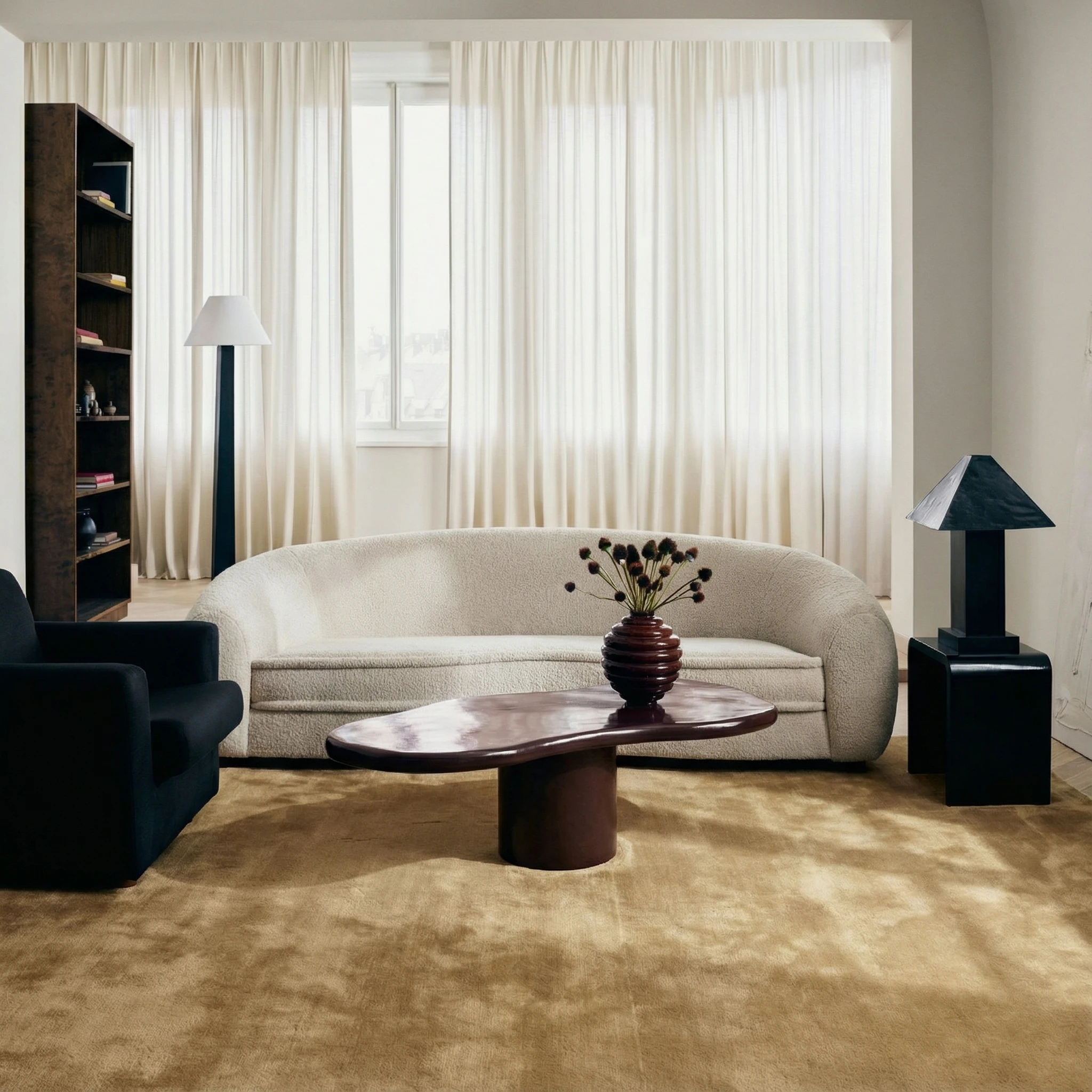
Within earth tones, designers are exploring more nuanced variations: not just "beige" but the specific difference between a warm sand, a cool stone, and a rich caramel. Color specification has become more sophisticated, and clients are increasingly receptive to the conversation. This is good news for handmade rugs, whose natural dyes and fiber variations create exactly the kind of tonal complexity that flat color cannot.
Cashmere Is Having Its Rug Moment
Cashmere has long been established as the pinnacle of luxury in apparel. Its translation into rug form has been slower, partly because of the material's cost and the technical challenges of weaving it at pile heights that do justice to its softness. What we are seeing in 2026 is that this barrier is dissolving.
Interior designers who have specified cashmere rugs for clients report a consistent reaction: nobody who has walked barefoot on a proper cashmere pile at 15mm ever wants to go back to wool alone. The sensory difference is immediate and unmistakable. And as clients become more experienced at recognizing genuine quality, they are increasingly willing to invest in it.
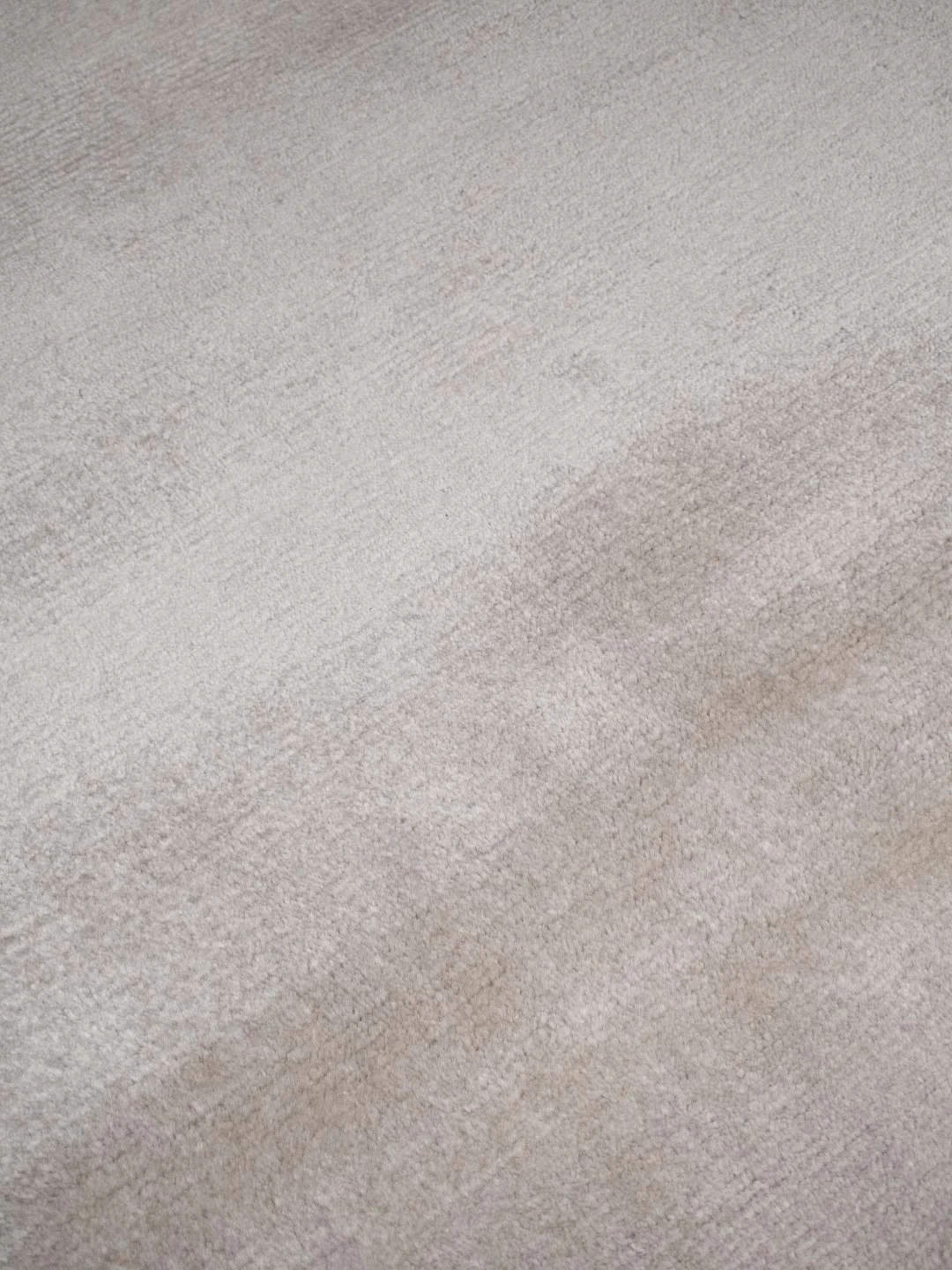
The Kapetto Cashmere collection addresses this moment directly. Four colorways — Caramel, Latte, Rose, and Lagoon — cover the primary directions of the current palette from warm neutrals to the softer mauvish tones that are appearing with increasing frequency in residential specification. All four are available in standard sizes up to 9 by 12 feet, with custom sizing available through the Trade Program.
Sustainable Materials Are No Longer Optional
Sustainability has moved from marketing language to genuine specification criteria at the mid-to-high end of the market. Designers are asking specific questions: What certifications does the producer hold? Where does the fiber come from? How are the artisans compensated? What happens to dye water after production?
The rugs passing this scrutiny share common qualities: natural fiber content (wool, cashmere, jute, and cotton are all gaining over synthetics), traceable supply chains, and producer certifications from third parties like GoodWeave and OEKO-TEX. These are not difficult requirements to meet if you build your supply chain around them from the beginning. They are impossible to retrofit onto a production model that was never designed with them in mind.

Jute is a particular beneficiary of the sustainability conversation. A rapidly renewable crop requiring no pesticides and minimal water, jute produces a rug fiber that is completely biodegradable. The Kapetto jute collection offers a relaxed, natural texture that works beautifully in casual and transitional spaces while carrying a genuinely clean environmental story.
Artisan Transparency Is a Design Value
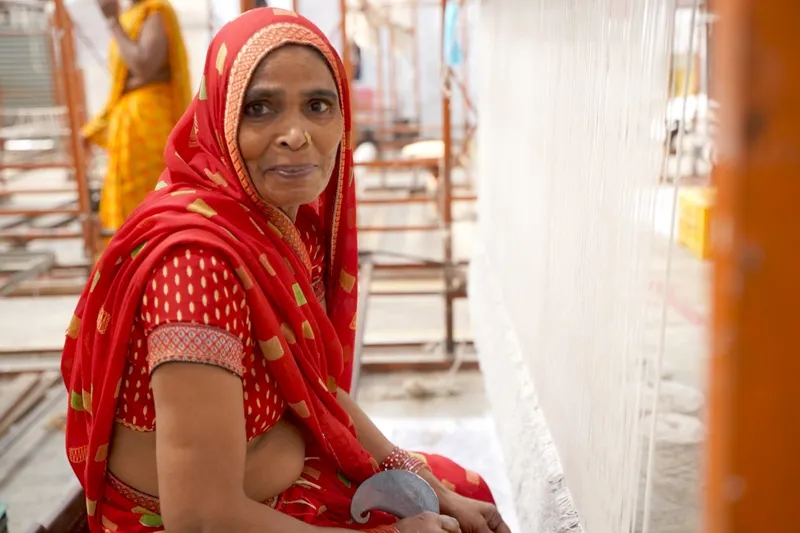
One of the more surprising modern rug trends is the extent to which clients want to know who made their rug. This is not a fringe concern; it is appearing in mainstream residential conversations at every price point above the mass market. Clients who would not have asked this question five years ago are now asking it routinely.
This creates a meaningful competitive distinction between brands that can answer the question and those that cannot. A Kapetto rug comes with the ability to show a client the specific artisan or workshop where their piece was made, the certifications that govern that workshop's practices, and a clear account of how the pricing supports fair compensation. That transparency has become a selling point rather than a nice-to-have.
Minimalist Patterns and Quiet Geometry
The maximalist moment in rug design — bold geometrics, high-contrast abstract patterns, graphic primary colors — is receding in favor of something quieter. The dominant pattern language in high-end rug specification right now is characterized by:
- Solid or near-solid fields with subtle tonal variation (the kind that natural fiber and natural dye produce organically)
- Simple geometric structures: grid patterns, minimal borders, unadorned fields
- Organic abstracts that suggest natural forms without literal representation
- Tone-on-tone patterning that reads as texture from a distance and reveals detail up close
This restraint does not indicate a lack of ambition. It indicates a mature understanding of how rugs function in a room: as a ground plane that makes everything above it look better, not as a statement piece competing with the furniture and art. The rugs that work hardest in 2026's interiors are the ones you notice last but could not imagine the room without.
Oversized Rugs Are Becoming the Standard
The undersized rug — a common error that makes rooms look smaller and disconnected — is finally being addressed at the specification stage rather than the installation stage. Designers are educating clients earlier in the process about proportion, and clients are increasingly receptive. The old rule of "front legs on the rug" is being replaced with the more confident position: the rug should encompass the entire seating group, or the entire dining table with chairs fully extended, with room to spare.
This means 9-by-12-foot rugs are becoming the new 8-by-10, and 10-by-14 is appearing more frequently in larger rooms. Custom sizing, once the exclusive province of hospitality projects, is now a routine conversation in residential specification. For designers working with Kapetto, the Trade Program includes custom sizing at all standard proportions with confirmed lead times.
The Return of Natural Texture
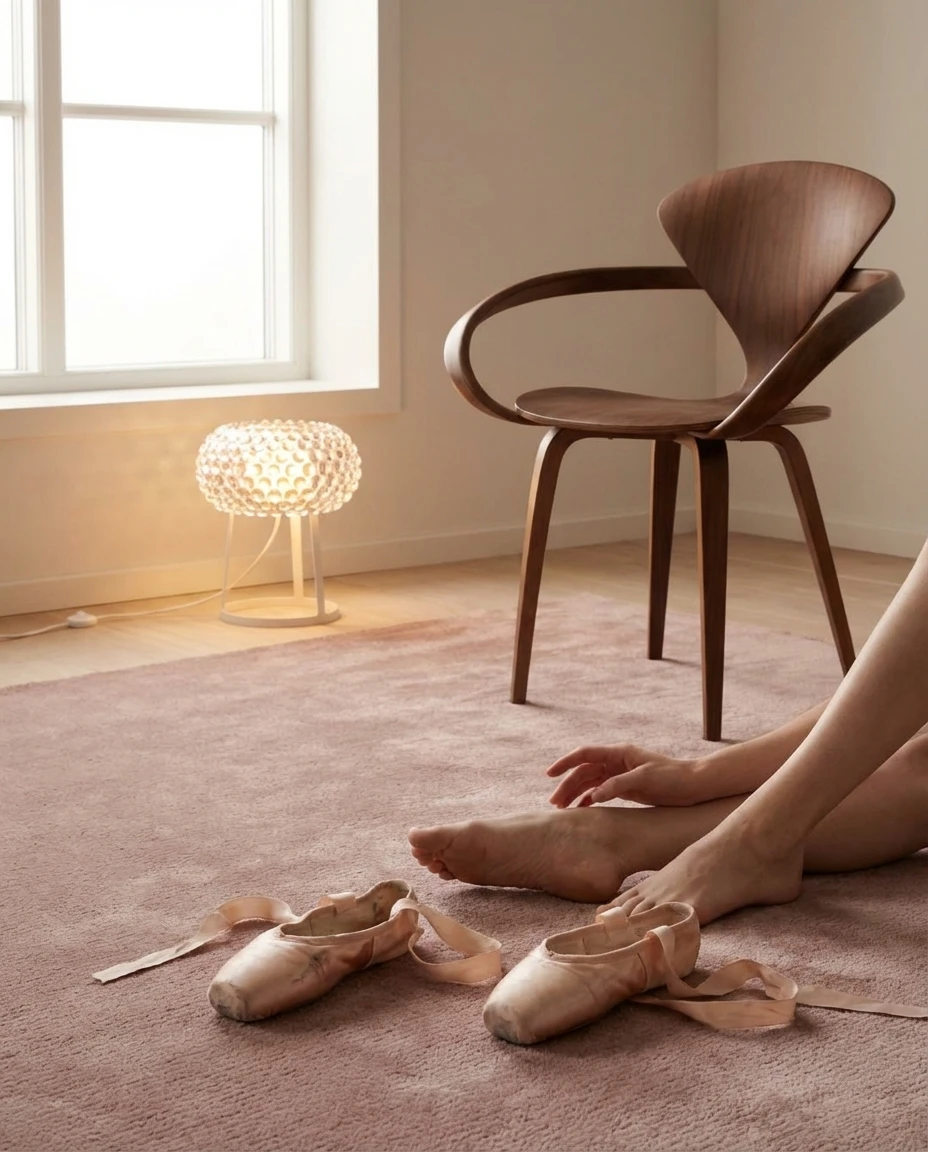
Alongside the move toward earth tones and sustainable materials, there is a growing appreciation for the inherent texture of natural fiber rugs — the slight variation in pile height, the organic irregularity of hand-knotted construction, the way light moves across a surface that is not perfectly uniform. Machine-made rugs have conditioned buyers to expect flawless consistency. The designers who have moved beyond that expectation are finding that natural variation is not a defect. It is the evidence of making.
A hand-loomed wool rug like the Nami has a surface character that no Axminster machine can produce: the way the pile compresses and recovers, the subtle variation in pile height that creates depth, the warmth that comes from real lanolin in real wool. These qualities are exactly what draws the most discerning designers to handmade rugs and what makes their clients feel, immediately, that something in the room is different and better.
Where the Market Is Heading in 2026
The through-line connecting all of these modern rug trends is a movement toward authenticity. Not the marketed kind, but the real kind: rugs made by specific people, from specific materials, using specific techniques that take time and cannot be faked. The buyers who understand this — designers and their clients alike — are increasingly willing to invest appropriately, because they understand that what they are buying will be in their rooms for decades, not years.
This is exactly the moment Kapetto was built for. Every piece in our collection is a direct expression of the same values that are now driving the broader market: material transparency, artisan relationship, sustainable practice, and the kind of quality that improves with time rather than deteriorating under it.
For designers exploring Kapetto for project specification, the Trade Program provides memo samples, detailed construction specifications, and custom lead times for all collections.

