

A handmade rug is a significant investment — in craft, in material, and in the life of the room it inhabits. Most of the threats to that investment are well understood: dirt, spills, heavy foot traffic. But the damage that accumulates most quietly and most permanently is also among the least discussed: rug fading from sunlight. UV exposure degrades both fiber and dye over time, and unlike a stain that appears suddenly and demands attention, sun damage arrives gradually and is often irreversible by the time it becomes visible. The good news is that it is almost entirely preventable.
How Ultraviolet Light Damages Rugs
Sunlight contains ultraviolet radiation in two primary bands: UVA, which penetrates glass easily and reaches deep into a room, and UVB, which is partially blocked by standard glass but still contributes to surface damage in areas near windows. Both bands affect rugs through two distinct mechanisms: photodegradation of fiber and photodegradation of dye.
Fiber Degradation
Natural fibers — wool, cashmere, silk, cotton, jute — are organic polymers whose molecular chains can be broken by prolonged ultraviolet exposure. In wool and cashmere, UV radiation attacks the sulfur bonds in the keratin protein that gives the fiber its strength and elasticity. Over time, this makes the fiber brittle, reducing its resilience and ultimately causing it to weaken and break at the root — which is why severely sun-damaged rugs often develop bald patches not from abrasion but from fiber failure at the base of the pile.
This degradation is cumulative and largely invisible until significant damage has occurred. A rug in direct sunlight for four to six hours daily can show measurable fiber weakening within two to three years, even before color change becomes obvious.
Dye Degradation
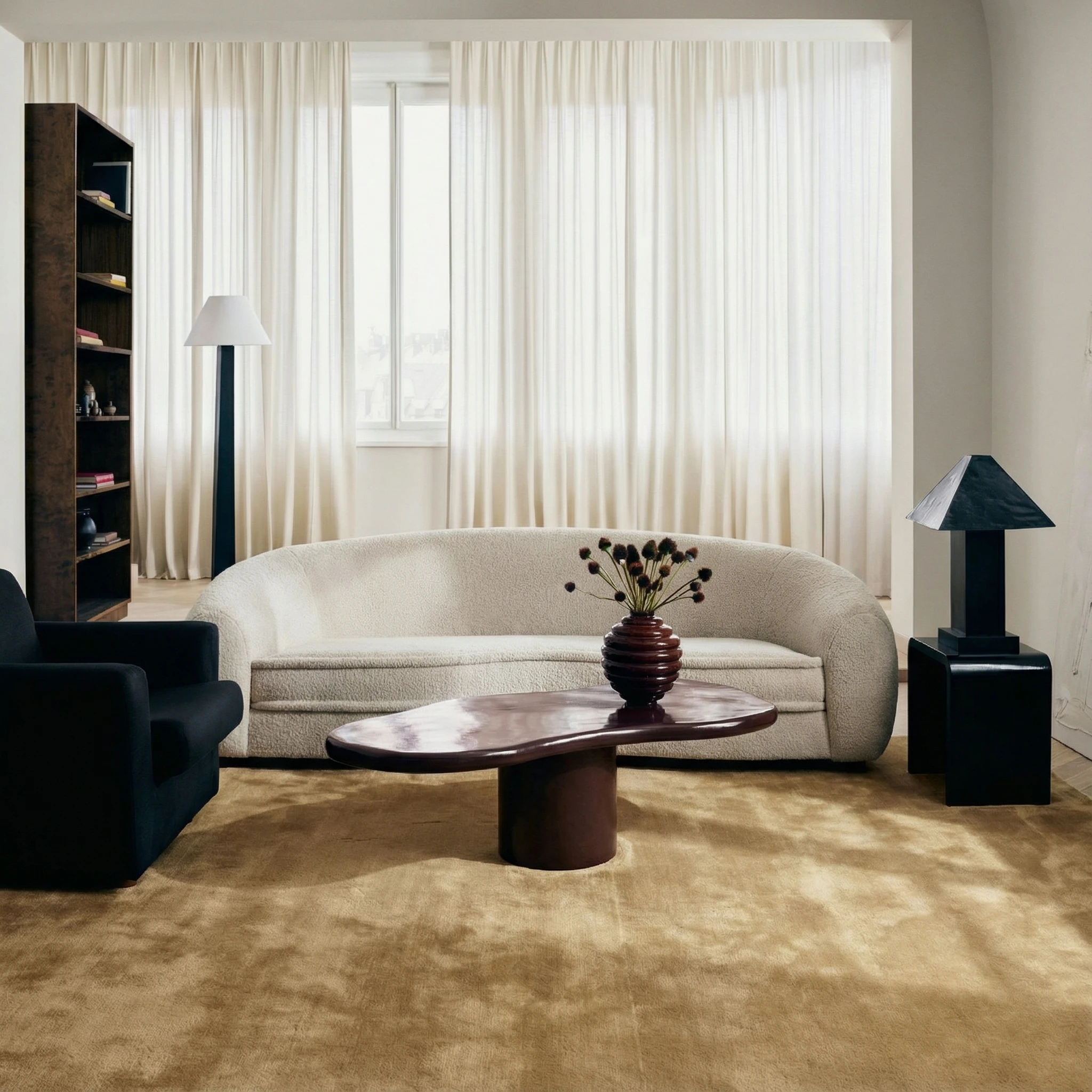
The color compounds in both natural and synthetic dyes are photosensitive to varying degrees. When UV radiation breaks down these compounds, the visible result is fading — but the pattern of fading is rarely uniform. The areas of the rug most exposed to direct sun will fade first and most severely, while shaded areas (under furniture, for example) retain their original color. The contrast between the two eventually becomes visible as a bleached-out patch or a general loss of saturation across the sunlit portion of the rug.
Which Materials Fade Fastest
Not all rug materials respond to UV exposure identically. Understanding the relative vulnerability of different fibers helps in making informed choices about rug placement and protection.
Silk is the most UV-sensitive of the common luxury rug fibers. Its fine, smooth surface offers little protection to the dye compounds it holds, and silk rugs in direct sunlight will fade noticeably faster than any other material. Silk rugs should never be placed in areas of direct sunlight under any circumstances.
Cashmere is similarly sensitive due to its fine fiber diameter. The delicate protein structure of cashmere fiber is vulnerable to UV attack, and its dyes — particularly the lighter tones like ivory and warm beige that characterize collections like Kapetto's Cashmere range — can shift perceptibly with sustained exposure. Cashmere is at its best in rooms with controlled or filtered light.
Wool is more UV-resistant than cashmere or silk, partly because its coarser fiber has a slightly more protective cuticle layer and partly because wool dyes are typically mordanted more deeply into the fiber. New Zealand wool rugs like Kapetto's Nami Caramel have good resistance to moderate sun exposure, but they are not immune. Sustained direct sunlight will still cause color shift over several years.
Jute and natural fiber flat-weaves have a different relationship with sunlight. They fade less dramatically in terms of color (because jute's natural tone is already muted), but UV exposure dries and brittles the fiber, eventually causing it to crack and shed. Jute rugs in full sun will show structural deterioration faster than they show color change.
Synthetic fibers (polypropylene, nylon) are generally more UV-resistant than natural fibers, but they are not immune, and many synthetic dyes are less stable than high-quality natural dyes under extended UV exposure.
Window Treatments: The First Line of Defense
The most effective way to protect a rug from UV rug protection is to reduce the UV radiation reaching it at the source. Window treatments designed specifically for UV filtration can block 85 to 99 percent of ultraviolet radiation while still admitting visible light — maintaining the bright, airy quality of a room without the damaging radiation that accompanies direct sun.
The options range from sheer UV-filtering curtains (which provide moderate protection and are barely visible when drawn) to solar shades (which block UV while maintaining outward views) to UV-blocking window film applied directly to the glass (which is invisible and provides protection even when no curtain is drawn). For rooms where direct sun exposure is significant — south-facing rooms in particular, or rooms with large west-facing windows that receive intense late afternoon light — window film is often the most practical and consistent solution.
Standard window glass blocks most UVB but allows the majority of UVA through. Low-emissivity (low-e) glass, increasingly common in new construction and renovation, blocks significantly more UVA and is an effective passive protection measure for any room where rug investment is significant.
Rotation Schedules: Distributing the Exposure
Even with effective window treatments, a rug in a light-filled room will receive some UV exposure over time. Rotation ensures that this exposure is distributed evenly across the rug's surface, preventing the differential fading that occurs when one area is consistently more exposed than another.
The recommended rotation interval for most rugs in residential use is every six to twelve months. For rooms with significant sun exposure, rotating every three to four months is more appropriate. Rotation means physically lifting and turning the rug 180 degrees, so that the end that was nearest the window is now furthest from it. This simple practice is the single most effective long-term protection measure available after UV filtration at the window.
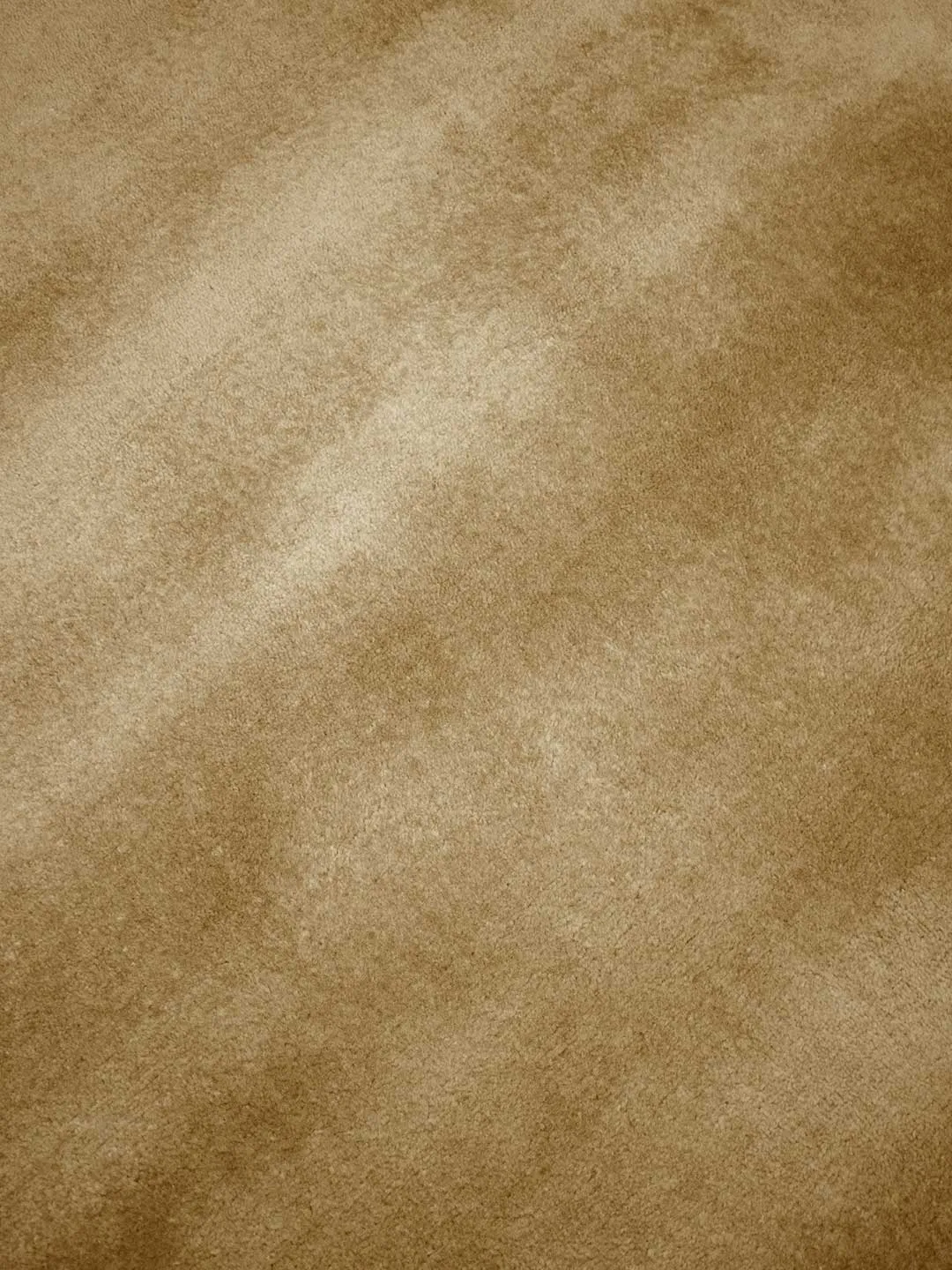
Moving furniture periodically serves a related purpose. Furniture legs create shadow patches on the rug beneath them, while the areas between pieces receive more light. Over years, this creates a pattern of differential fading that mirrors the furniture layout. Rotating the rug corrects this; moving furniture also helps by changing the shadow pattern.
Natural vs. Synthetic Dyes: Resilience Compared
There is a persistent and somewhat counterintuitive truth about dye stability: well-executed natural dyes, properly mordanted, can be more UV-stable than many synthetic dyes. This is the opposite of what most people assume. The perception that natural colors are fragile comes from exposure to poorly mordanted natural dyes — the kind seen in inexpensive "natural" products where the dye has not been chemically fixed to the fiber.
High-quality natural dyes used with appropriate mordants (typically alum, iron, or tannin) form a chemical bond with the wool or cashmere fiber that is genuinely resistant to UV degradation. Many antique rugs dyed with natural materials show color that remains vibrant after a century of use. Synthetic dyes vary enormously in UV stability depending on their chemistry. The best synthetic dyes (those used in quality rug production) are highly stable. Cheaper synthetic dyes can fade quickly.
Kapetto's partner workshops in Bhadohi use a combination of natural and synthetic dyes selected specifically for their stability under the conditions these rugs will encounter in residential use. The dyeing process is one of several areas covered by the workshop's quality certification standards.
When Fading Occurs: Repair and Restoration Options
If fading has already occurred, the options for restoration depend on the severity of the damage and the type of rug. Minor, even fading across a rug's surface — the kind that comes from years of gentle ambient light rather than direct sun — can sometimes be partially corrected by a professional rug washer who specializes in vegetable or natural dyeing. The process involves overdyeing the affected area with a carefully matched color that brings the tone back toward the original.
More severe or patterned fading — bleached patches, strong differential fading between sun and shade areas — is much harder to correct. Overdyeing the entire rug in a single color can mask the fading but changes the rug's character. Spot redyeing a patterned area requires specialist skill and is expensive, and matching the original color precisely is extremely difficult once the base color has shifted.
The honest conclusion is that prevention is vastly more effective than restoration. A rug that has been well-protected from UV exposure over its lifetime will look better at twenty years than a less-protected rug at five. The investment in window film, UV-filtering curtains, and a consistent rotation habit pays for itself many times over in the life of a quality handmade piece.
For more detailed care guidance specific to your Kapetto rug, including material-specific recommendations, contact the Kapetto team directly through the Trade Program page or explore the Craft section for more on the materials and processes behind your rug.


