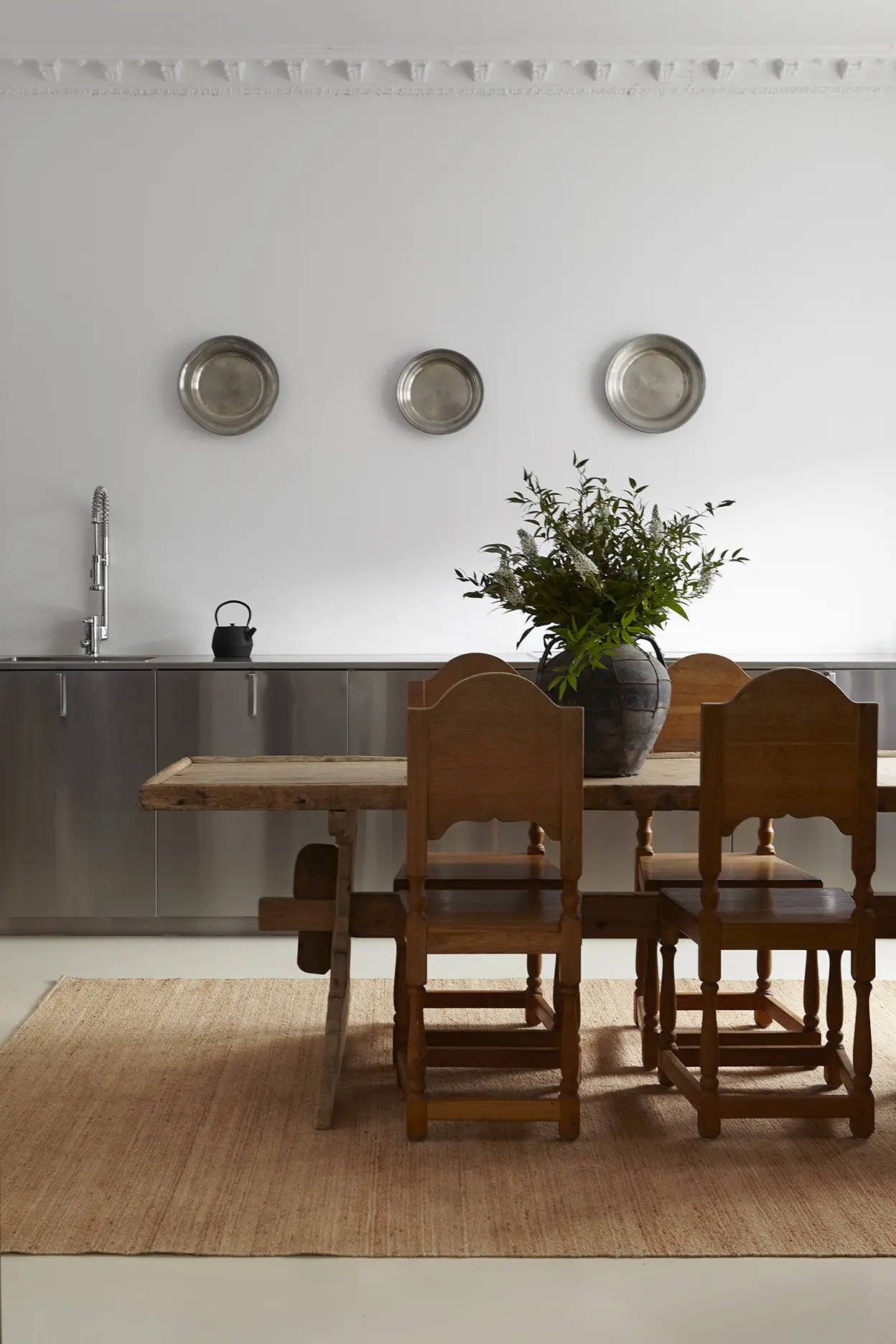

Interior designers and architects who work with Kapetto return for one consistent reason: the relationship works. The product quality is exceptional, but quality alone does not build a long-term professional partnership. What sustains these relationships is a trade rug program built around the actual workflow of design practice — one that respects your time, your clients' expectations, and the complexity of specifying custom rugs across residential and commercial projects.
This guide covers everything you need to know about working with Kapetto as a design professional: trade pricing, the sampling process, custom sizing, lead times, and how to apply. Whether you are specifying a single statement rug for a residential client or outfitting multiple rooms in a hospitality project, this is how the partnership works.
The Trade Program: What It Offers
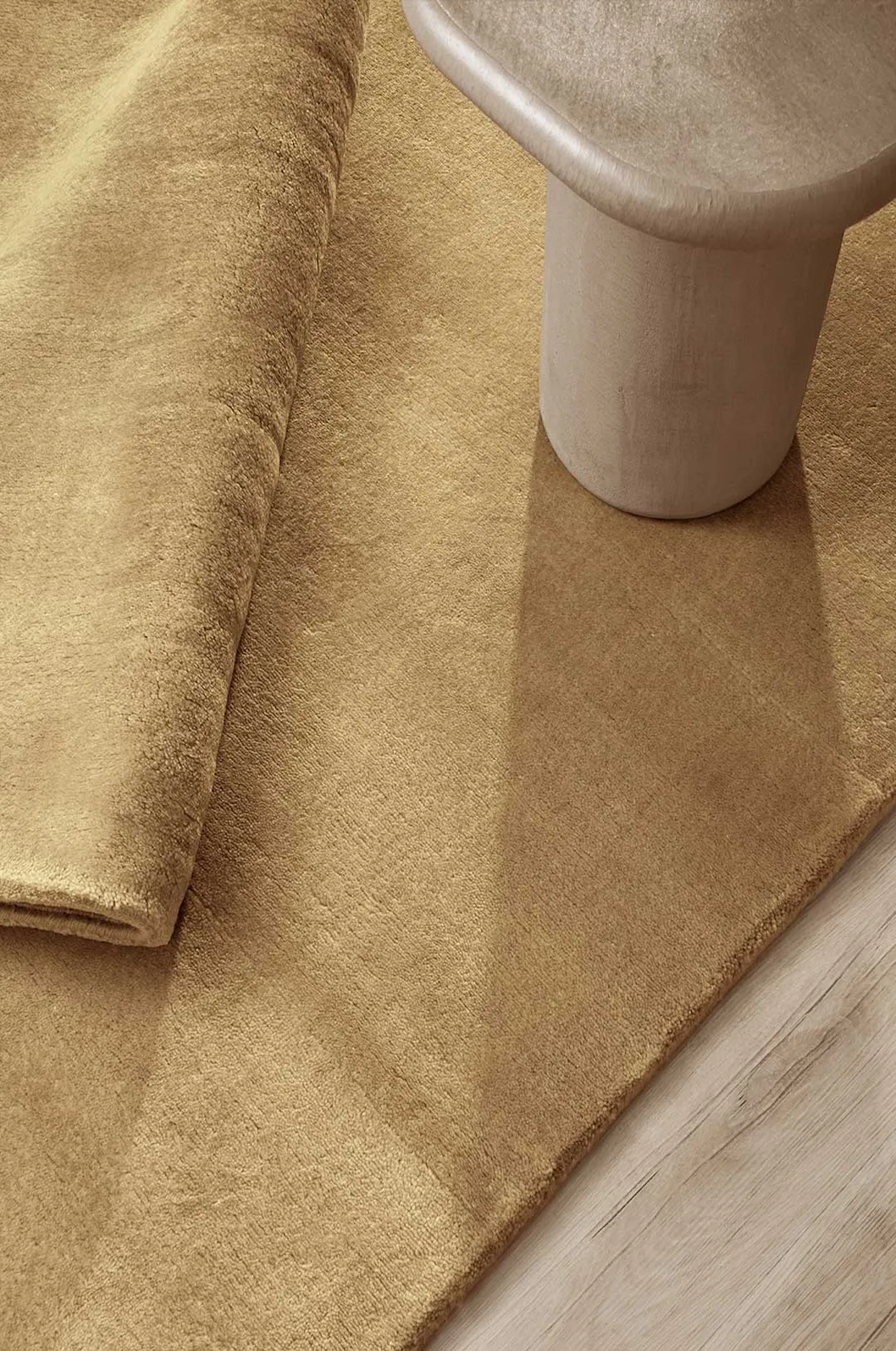
Kapetto's trade program is designed for licensed interior designers, interior architects, architects, and hospitality procurement professionals. It offers three core benefits that distinguish it from standard retail purchasing:
Trade pricing. Verified trade accounts receive a designer rug discount applied to all standard and custom orders. The discount structure is tiered by annual volume, so the program grows more valuable as your practice and your relationship with Kapetto grows. Pricing details are shared directly with verified accounts and are not published publicly in order to maintain fair market conditions.
Dedicated account support. Trade clients are assigned a dedicated account contact who understands the demands of professional specification. This is not a call center. Your contact knows your projects, your preferred construction types, and your typical lead time requirements. When you need a quick answer or a custom quote, you reach someone who can actually provide it.
Access to custom sizing. All Kapetto products are available in custom dimensions beyond the standard size range. Custom sizing is available exclusively to trade and retail clients through the standard custom order process, but trade accounts receive priority scheduling and dedicated communication throughout the production timeline.
The Sampling Program
Specifying a rug without seeing and feeling it in person is a risk no designer should have to take. Kapetto's sampling program is designed to make the physical evaluation of materials straightforward for professional accounts.
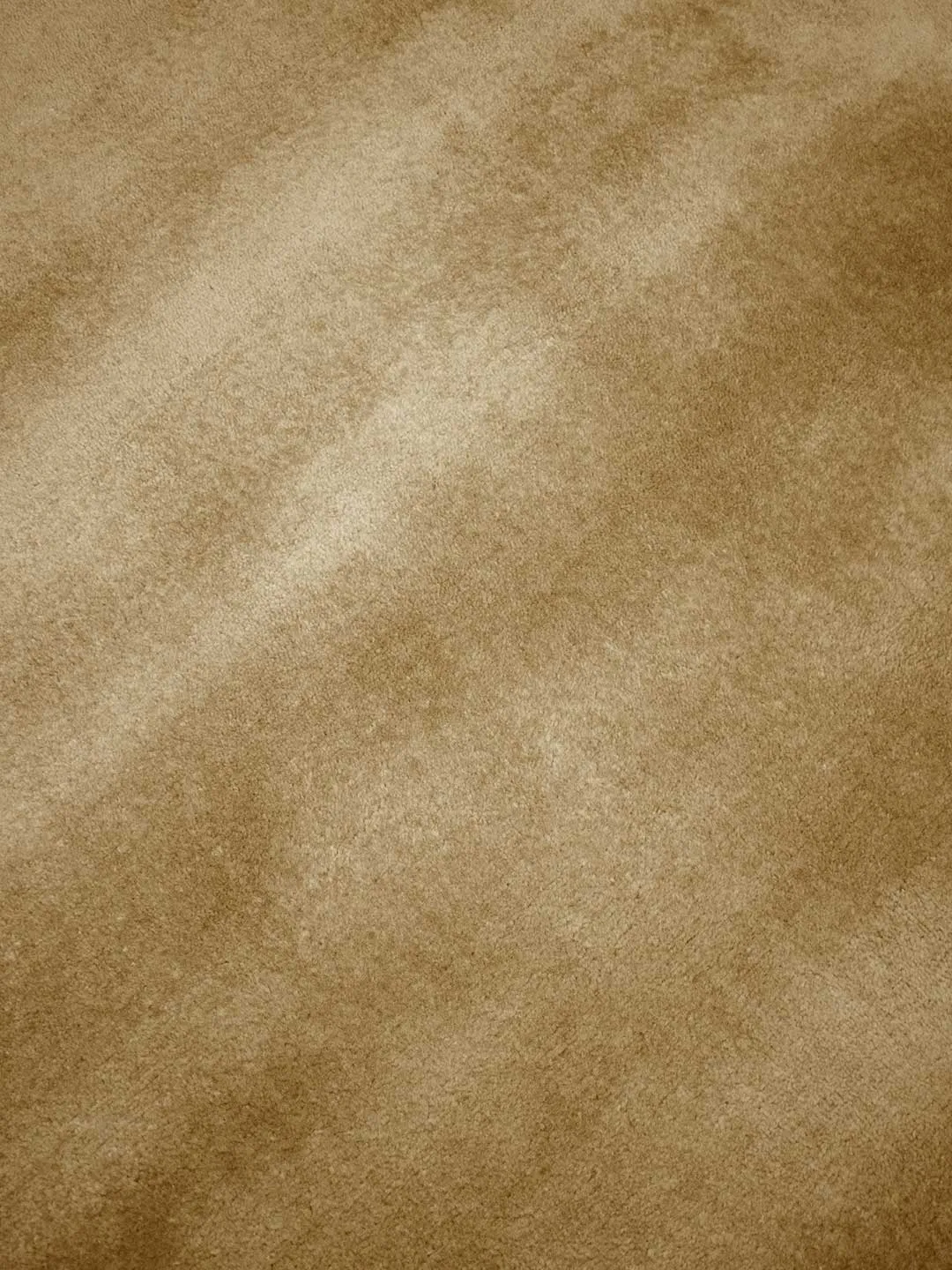
Trade clients may request material samples for any product in the collection. Samples show the actual fiber, pile height, weave construction, and colorway of the production rug. They are sized to give a genuine sense of the material at hand rather than a token swatch.
For large hospitality or multi-unit residential projects, we also offer presentation samples — larger format pieces suitable for client presentations and finish board development. These are available on a project-by-project basis and should be discussed directly with your account contact.
To request samples, apply to the trade program at the trade page, or reach out directly with your project details. Samples are prepared and shipped promptly, and we can expedite when a project timeline is tight.
Custom Sizing: The Process
Standard sizes cover the most common residential and commercial applications, but design practice regularly produces room configurations that fall outside standard dimensions. A gallery with a 7-by-11-foot focal zone. A dining room that needs a 10-by-14. A hotel suite with a 6-by-15 corridor space. This is where custom sizing becomes essential.
Every Kapetto product is available in custom dimensions. The custom sizing process works as follows:
Step one: Provide your dimensions. Submit your required width and length (in feet and inches) along with the product you are specifying. If the project involves multiple rugs at different sizes, submit them together so production can be coordinated for consistent quality across the project.
Step two: Receive a custom quote. Custom pieces are priced on a per-square-foot basis, with a premium applied over the standard per-square-foot rate to reflect the additional production complexity. Exact pricing is provided within one business day of receiving your specifications. Custom pricing for the collections begins at $20 per square foot for the Sabi jute, through to $55 per square foot for the cashmere collection and $60 per square foot for the Kiri hand-knotted.
Step three: Approve the order. Once you have confirmed the dimensions and quote, a formal order is placed. For custom pieces, we require a deposit at order placement, with the balance due prior to shipment.
Step four: Production and updates. Your account contact keeps you informed of production milestones. For projects with multiple pieces, we coordinate production sequencing to minimize the gap between completion dates where possible.
Lead Times: Planning Your Project Timeline
Hand-knotted and loom-knotted rugs are made to order. They cannot be produced faster than the craft allows, and we will not compromise quality to meet an unrealistic timeline. The most important thing any designer can do when specifying Kapetto rugs is to plan around accurate lead times from the start.
Standard lead times are as follows:
- Standard sizes in stock colorways: 4–8 weeks
- Custom sizes, standard construction: 16–22 weeks (regular delivery)
- Custom sizes, expedited production: 12–16 weeks (expedited delivery, subject to loom availability)
- Custom colorways or bespoke design: 24–30 weeks depending on complexity
Expedited production carries a premium of approximately 20 percent over the standard custom price and is subject to current production capacity. It is available for most products but should be confirmed with your account contact before being communicated to a client as a firm commitment.
For hospitality projects, where installation windows are often fixed by construction or renovation schedules, we strongly recommend initiating the rug specification and ordering process at design development phase, not during construction documents. Rug lead times that feel comfortable at design development become tight at construction and impossible at punch list.
Residential Projects
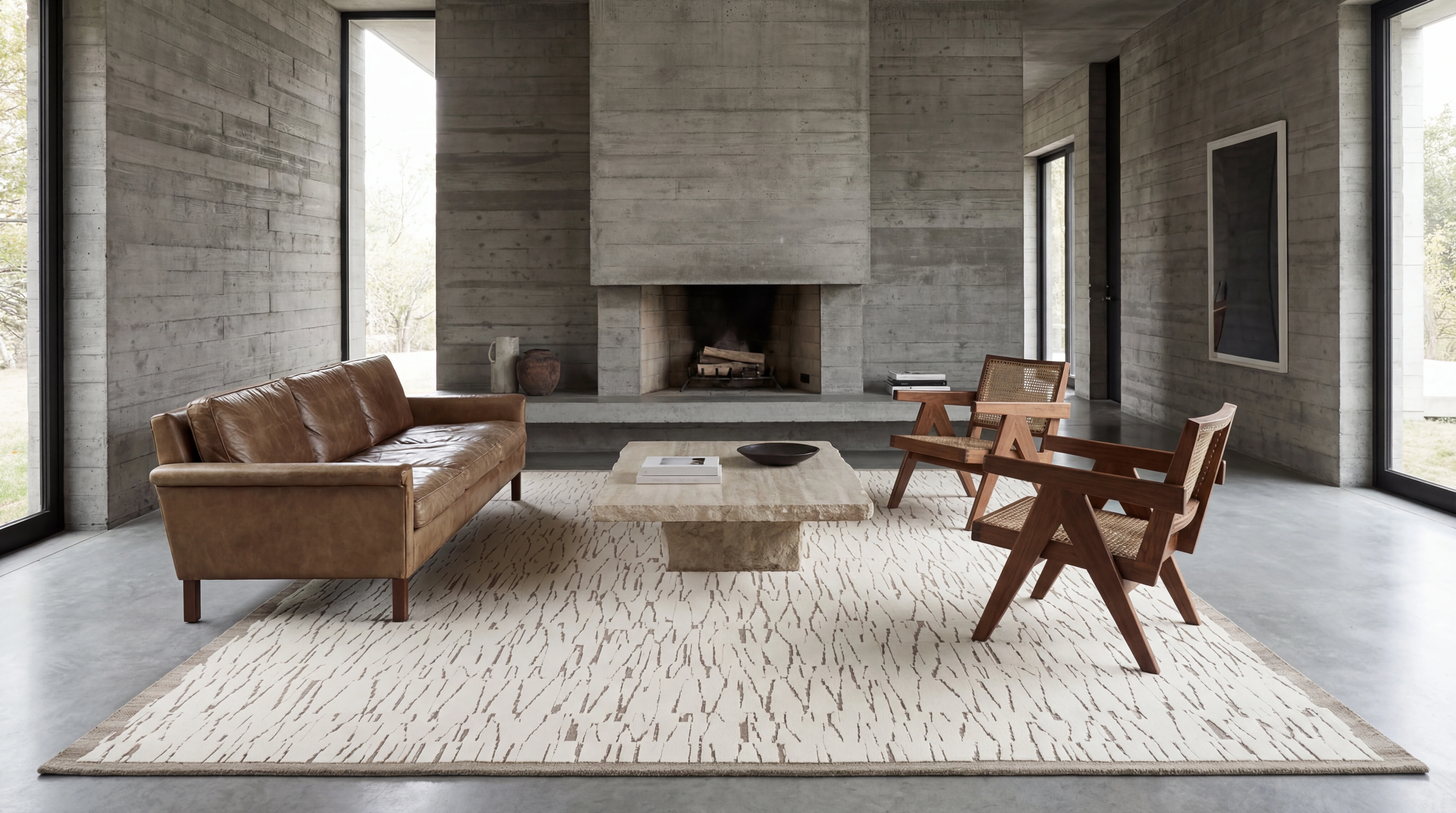
The majority of Kapetto's trade volume is residential: primary residences, vacation homes, high-specification rental properties, and multi-unit luxury developments. In residential contexts, the most commonly specified products are the cashmere collection for bedrooms and primary sitting rooms, and the wool collection for living areas, dining rooms, and children's rooms.
For residential clients, we recommend the following approach to product selection by room type:
Primary bedroom. Cashmere is the obvious choice for rooms where bare feet meet the floor every morning and evening. The 15mm pile of Kapetto's cashmere provides a level of underfoot softness that no wool or synthetic construction can match. The Cashmere Caramel and Cashmere Latte are the most frequently specified colorways for warm-toned bedroom palettes.
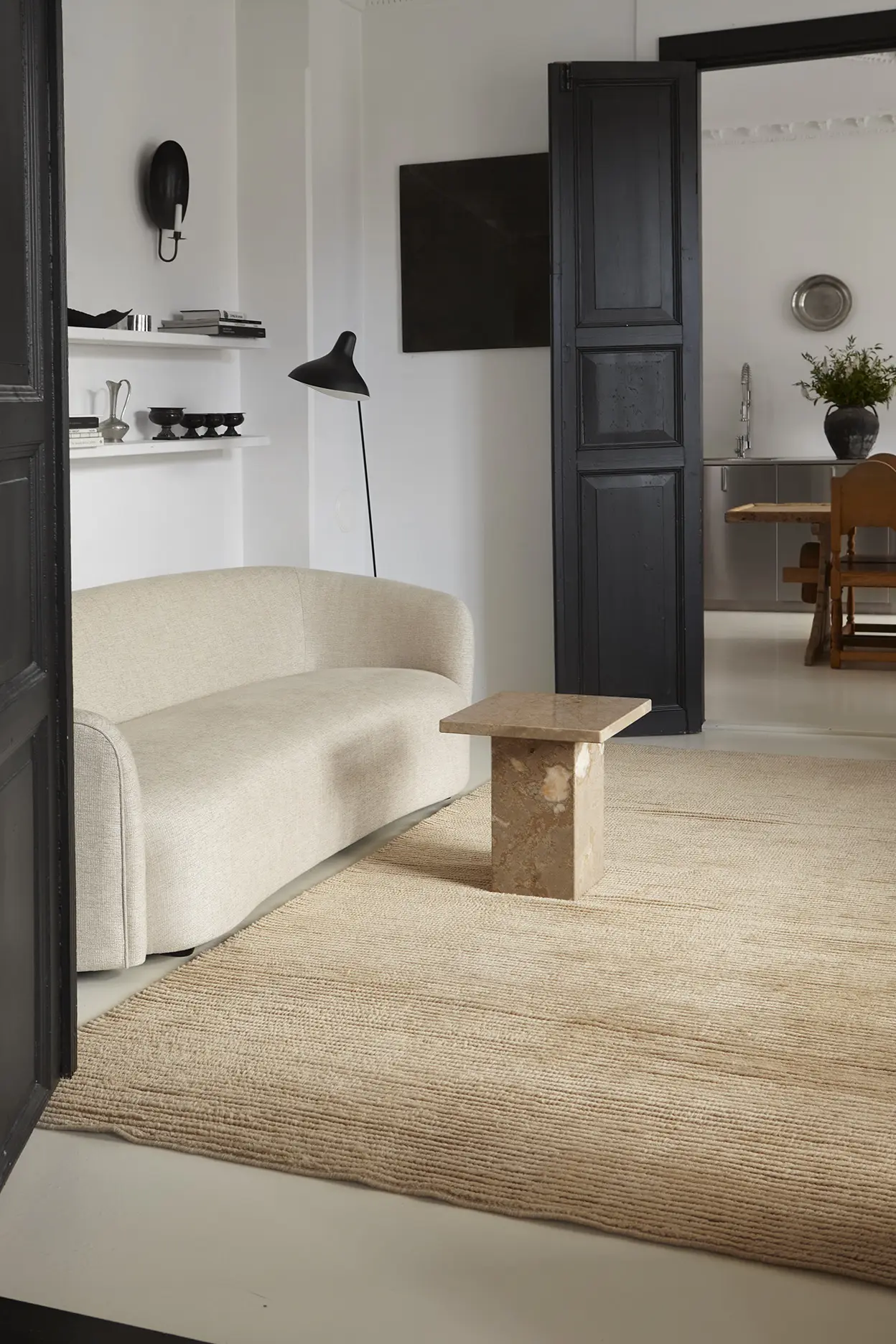
Living and sitting rooms. The Nami wool rug offers the visual warmth of a natural fiber at a price point that allows larger coverage areas. For clients who want the definition and visual structure of a pattern, the Kiri hand-knotted is consistently well received.
Dining rooms. A flat-weave or low-pile construction is easier to maintain in dining contexts where food and liquid spills are inevitable. The Sabi natural jute works beautifully in casual dining settings; the Nami in more formal ones.
Children's rooms and playrooms. Wool is the appropriate specification here: naturally soil-resistant, resilient, and durable. The Nami and Yuka constructions hold up exceptionally well to heavy use.
Hospitality Projects
Kapetto has supplied rugs for hotel suites, boutique resort villas, private members' clubs, and high-end restaurant interiors. Hospitality projects differ from residential in three important ways: scale, durability requirements, and the complexity of the procurement and logistics process.
On durability, the Kiri hand-knotted is the primary recommendation for hospitality applications. Its dense knot structure and wool construction give it the resilience to maintain its appearance under daily commercial use. Cashmere, while extraordinary in residential contexts, is generally reserved for low-traffic hospitality spaces such as private suites and executive lounges where the priority is luxury rather than durability.
For multi-room hospitality projects requiring consistent colorways across many pieces, we work with your team from the outset to ensure dye lot consistency and production coordination. This is where the trade program's dedicated support structure genuinely earns its place: you should never be managing a 20-room specification through a general inbox.
We also work with procurement consultants and FF&E purchasing agents on behalf of design firms when the project structure requires it. If your project involves a third-party procurement partner, introduce them to your account contact early so the communication chain is established before it is needed under deadline pressure.
Pricing Tiers and Volume
Trade pricing is structured in tiers based on annual purchase volume. Entry-level trade pricing is available to all verified professional accounts from the first order. As your volume grows across a calendar year, your account is reviewed and upgraded accordingly. There are no complex rebate structures or retroactive pricing adjustments — the tier that applies to your account applies to all orders placed within that tier period.
We do not publish specific discount percentages publicly, but trade pricing is meaningful. It is structured to allow design professionals to build an appropriate margin when billing clients for furnishing selections, and to make Kapetto genuinely competitive with other luxury rug sources when total project value is considered.
For large single-project volumes — typically a full hotel property or large residential development — project pricing is available outside the standard tier structure. Contact your account representative to discuss project pricing for any specification exceeding a defined minimum order value.
How to Apply
Applying to the Kapetto trade program is straightforward. Visit the trade page and submit your application with the following information:
- Your firm name and website
- Your professional license or business registration number
- A brief description of your practice type (residential, commercial, hospitality, or mixed)
- Your approximate annual rug specification volume (this helps us assign the right account contact)
Applications are reviewed within two business days. Once approved, you will receive access to trade pricing, direct contact information for your account manager, and information on requesting your first samples.
If you have an active project with an immediate timeline, note this in your application and we will prioritize your review.
A Partnership Built on Reliability
The designers who specify Kapetto rugs most consistently describe the same thing: they trust that what arrives will match what was specified, that the timeline they were given will be honored, and that if anything changes, they will hear about it from their account contact before they hear about it from their client.
That reliability is not accidental. It is the result of clear communication at every stage, production processes that are genuinely understood by the people managing them, and a commitment to treating professional relationships with the seriousness they deserve.
If you are an interior designer or architect who has not yet worked with Kapetto, the best place to begin is the trade page. If you are an existing client with a new project, reach out to your account contact directly. And if you would like to explore the full collection before applying, the artisans page, the craft story, and the product collections are the right place to start.