

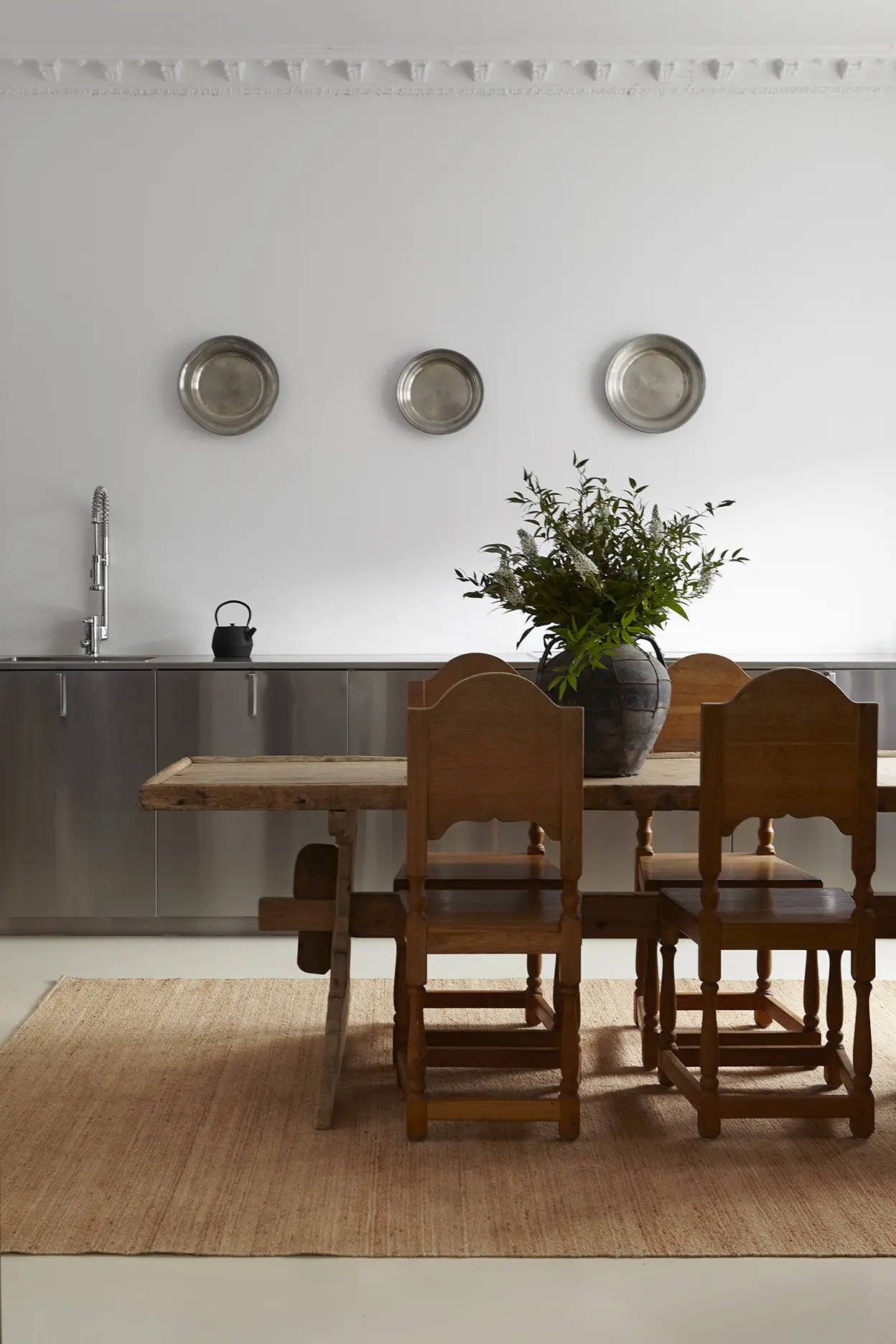
Jute rugs occupy a particular place in interior design: they are among the most honest objects a room can contain. No synthetic chemistry, no hidden backing, no pretense. Just a plant fiber grown in the plains of Bangladesh and eastern India, processed by hand, and woven into a surface that brings warmth, texture, and an almost geological groundedness to any space. If you are considering jute rugs for a project — or simply trying to understand what the material actually delivers — this guide covers everything from fiber properties to jute rug care to how it compares with sisal, seagrass, and the other natural alternatives.
What Jute Actually Is
Jute is a long, soft vegetable fiber extracted from the stem of the Corchorus plant, a member of the mallow family. It grows best in the warm, humid climate of the Bengal region — Bangladesh and the Indian state of West Bengal together produce over 85 percent of the world's jute supply. The plant grows to between three and five meters in roughly 120 days, making it one of the fastest-growing crop fibers on earth and one of the most renewable textile materials available.
After harvest, jute stems are retted in water — a process of controlled biological decomposition that separates the fiber from the woody core. The fiber is then dried, graded by length and fineness, and spun into yarn. Higher-grade jute has a natural golden luster and a fiber length that allows for a tighter spin and a smoother finished surface. Lower-grade jute has more visible texture and tends toward a rougher hand.
For rug-making, jute is valued primarily for its texture, its natural color range (cream to golden amber, with gentle variation across individual fibers), and its very low environmental footprint. It is biodegradable, requires minimal chemical processing, and binds carbon during its rapid growth cycle.
Jute vs Sisal vs Seagrass: What Actually Differs
These three natural fibers are frequently grouped together, and in broad terms they share similar aesthetics — organic texture, neutral tones, a connection to the natural world. But their properties diverge in ways that matter for specification.
Jute is the softest of the three. Its fibers have a slight give that makes it more comfortable underfoot than sisal or seagrass, and it takes natural dyes more readily, which expands the color palette available to designers. Its primary limitation is moisture sensitivity: jute fibers weaken when wet and can develop mold if exposed to humidity without adequate drying. It is not appropriate for bathrooms or exterior use, and care in high-humidity environments requires attention.
Sisal is extracted from the agave plant, primarily grown in Brazil, Tanzania, and Kenya. The fiber is stiffer and more abrasion-resistant than jute, which makes sisal rugs more durable in high-traffic areas. The texture is noticeably rougher underfoot, which limits its appeal in rooms where bare feet meet the floor. Sisal is also moisture-sensitive, though slightly less so than jute.
Seagrass is the outlier. Unlike jute and sisal, seagrass is aquatic, grown in flooded paddies in China and Southeast Asia. Its fibers are naturally waxy, which makes the surface slightly slick underfoot and very resistant to moisture and staining. The same waxiness, however, means seagrass does not accept dye, leaving designers with a limited natural color range of muted green-grey and tan. It is the most durable of the three for wet environments, but the least versatile aesthetically.
For interior designers working in warm residential contexts — living rooms, studies, dining rooms, master bedrooms with good ventilation — jute offers the most favorable balance of softness, aesthetics, and natural character.
The Kapetto Sabi Collection
Kapetto's Sabi collection represents our interpretation of jute weaving at its most refined. Sabi — from the Japanese aesthetic concept of wabi-sabi, the beauty of imperfection and impermanence — is a flat-weave construction made from hand-spun jute yarn in natural undyed and plant-dyed colorways.
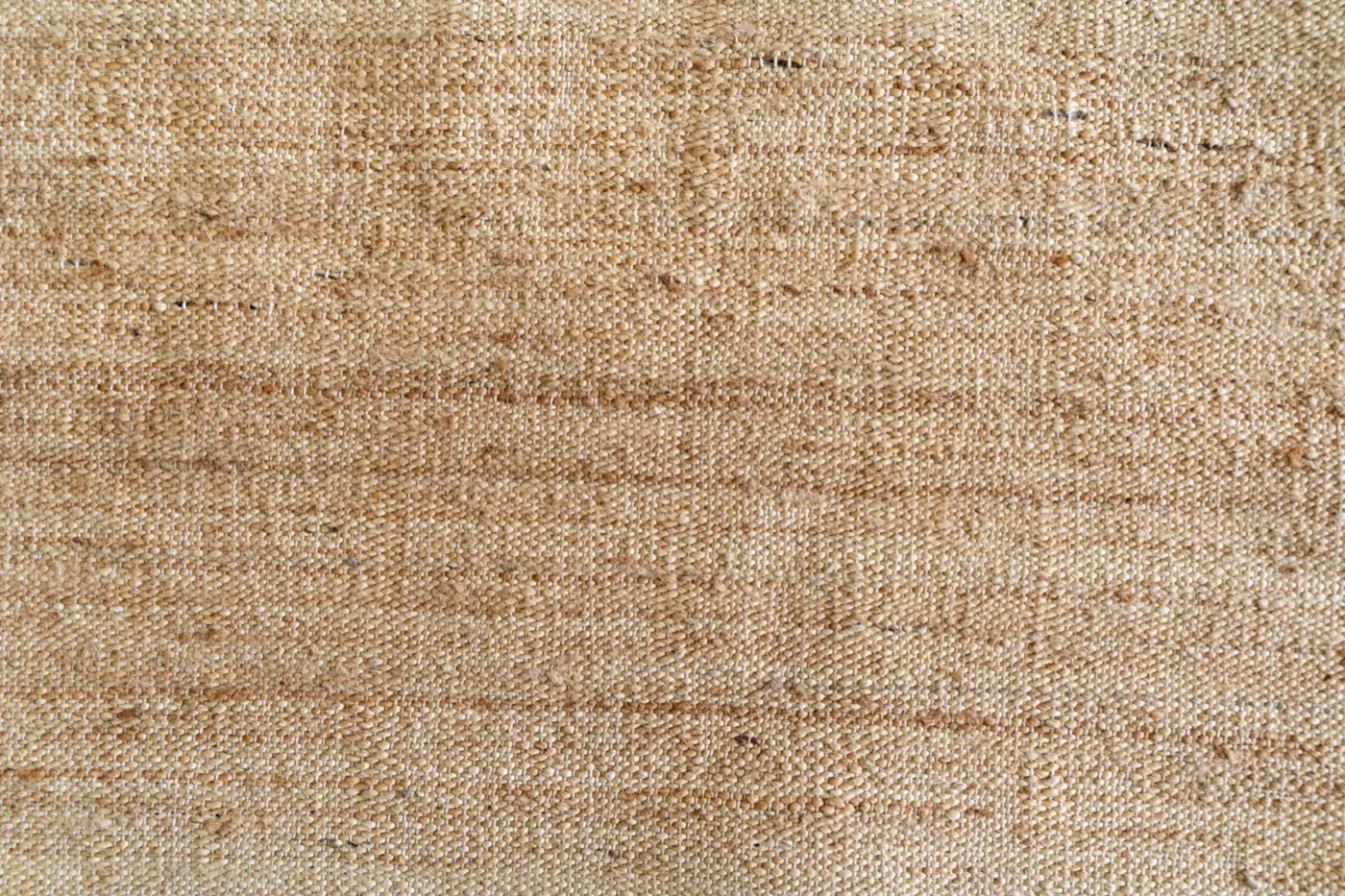
The weave structure is a balanced plain weave, meaning warp and weft threads interlace at equal intervals, creating a surface with no directional pile and consistent texture in all orientations. This makes Sabi particularly forgiving to place — it reads the same from all angles and does not show traffic patterns in the way a pile rug might. The flat construction also means the rug lies very close to the floor, minimizing trip hazard at the edges and making it compatible with rooms where door clearance is limited.
Sabi is available in two colorways: Natural (the undyed cream and golden amber of raw jute fiber) and Sand (a warm pale grey achieved with a mineral wash that does not fundamentally alter the fiber's hand). Both work naturally alongside the Kapetto cashmere and wool collections, allowing for layering without competition.
Best Rooms for Jute Rugs
Jute's properties make it ideal for certain environments and less suited to others. The following guidance applies to high-quality flat-woven jute like the Sabi collection.
Living rooms are the most natural home for jute rugs. The organic texture grounds a seating arrangement without competing with upholstery or art, and the neutral palette works across virtually every furniture style. In open-plan living and dining configurations, a jute rug in the living zone pairs well with a warmer pile rug under the dining table, creating a visual distinction between zones without a jarring color break.
Studies and libraries benefit enormously from jute's textural warmth. The material connects intellectually to books, wood, leather, and other natural materials, and its flat weave makes it easy to roll desk chairs across without the resistance that a pile rug creates.
Dining rooms are workable with jute, with some caveats. Food spills need to be addressed immediately, and the rug benefits from professional cleaning annually. The flat surface of the Sabi collection is easier to maintain in this context than a looped or tufted jute, as debris sits on top rather than embedding in the weave.
Bedrooms are excellent for jute provided the rug is not placed in a bathroom-adjacent position where moisture is a regular concern. In a master bedroom, a Sabi rug under the bed and extending to either side creates a grounding element that works beautifully alongside Kapetto cashmere bedside rugs, which can be layered for additional softness at the points where bare feet most frequently land.
Avoid using jute in bathrooms, laundry rooms, or any space with regular water exposure. High-humidity basements and north-facing rooms with poor ventilation also present risk. In these environments, seagrass or synthetic alternatives are more appropriate.
Jute Rug Care: A Practical Guide
Jute rug care is straightforward once you understand the fiber's relationship with moisture. The fundamental rule is simple: keep it dry.
Regular maintenance. Vacuum weekly using a suction-only setting without a beater bar, which can damage the flat weave structure over time. Rotate the rug every six months to distribute any traffic wear evenly. Shake smaller pieces outdoors periodically to dislodge fine debris that vacuuming misses.
Spills. Act immediately. Blot — never rub — with a clean, dry white cloth to absorb as much liquid as possible. For water spills, this is usually sufficient. For food or beverage stains, use a clean cloth dampened with cold water and a tiny amount of mild dish soap, working from the outside of the stain inward. Rinse with a clean damp cloth and allow to dry completely in a well-ventilated space. Do not use steam cleaners or wet shampoo systems on jute.
Professional cleaning. Every two to three years, have the rug professionally cleaned by a specialist who is familiar with natural plant fibers. Dry-cleaning methods are generally safer for jute than wet washing. A good specialist will also re-block the rug after cleaning to correct any dimensional changes that occur during the process.
Padding. Always use a rug pad. For flat-weave jute on hard floors, a thin felt pad provides grip and protects the underside of the rug. On carpet, a rubberized pad prevents movement. A pad also slightly cushions the inherent firmness of flat-woven jute underfoot, which improves comfort without changing the rug's visual character.
Styling Jute Rugs in Contemporary Interiors
Jute's greatest aesthetic strength is its neutrality. It does not compete. It cooperates. This makes it one of the most versatile foundation materials in a designer's toolkit.
In a room anchored by strong architectural elements — exposed wood beams, concrete walls, aged brick — a Sabi natural jute rug amplifies the material richness without adding visual noise. In a more minimal, pale-toned interior, jute introduces organic warmth that prevents the space from feeling cold or sterile.
Layering is a particularly effective technique with jute. A Sabi rug as the base layer, with a smaller cashmere rug or wool rug on top, creates depth and allows for the introduction of a warmer accent color. This approach also provides practical benefits: the cashmere or wool layer protects the jute at the highest-traffic point, while the jute base anchors the full furniture arrangement.
For designers working on projects where sustainability is a client priority, jute provides a compelling material narrative. It is carbon-sequestering during growth, fully biodegradable at end of life, and in Kapetto's Sabi collection, produced in a workshop that holds GoodWeave certification for ethical labor practices.
What to Look for When Buying Jute Rugs
Not all jute rugs are created equal. The following specifications distinguish quality pieces from commodity alternatives.
Weave density is the first indicator. Hold the rug up to light: a quality flat-woven jute should show no daylight through the weave. Loose, open weaves shed more readily and will show wear faster.
Fiber grade matters more than price alone can indicate. Higher-grade jute has longer fibers, a finer spin, and a more consistent natural luster. It also sheds significantly less in the first months of use.
Finishing quality shows in the edge binding. A well-made jute rug has edges that are cleanly overcast or bound in a complementary material — canvas or cotton tape — with no raw ends that will unravel in normal use.
The Kapetto Sabi collection meets all these standards. It is made in a workshop we have worked with for years, using fiber we source directly from trusted suppliers in West Bengal. It is one of those quiet, lasting things that earns its place in a room not through spectacle but through steady, undemanding presence — exactly what jute, at its best, has always offered.


