

Few decisions in an interior project generate as much quiet debate as rug construction. When a client asks whether to choose a flat-weave or hand-knotted rug, the answer is never purely aesthetic — it involves traffic patterns, budget, maintenance expectations, and the quality of light in the room. Understanding how each construction type is made, and what that means in daily life, gives designers and homeowners alike the confidence to choose well.
At Kapetto, we make both. Our Yuka is a refined flat-weave in New Zealand wool; our Kiri is a hand-knotted piece of considerable depth and presence. They serve different rooms, different moods, and different moments. Here is how to think through the decision.
What Is a Flat-Weave Rug?
A flat-weave rug — sometimes called a kilim, dhurrie, or soumak depending on its origin and technique — is constructed entirely on a loom by interlacing warp and weft threads. There is no pile: no cut yarn standing up from the surface. The result is a rug that lies completely flat, with a surface that shows the woven structure directly.
Traditional kilims from Anatolia and the Caucasus are perhaps the most recognized form, but flat-weave encompasses a wide range of techniques. In the Bhadohi tradition, flat-weave rugs are woven with precision using high-twist wool yarn, creating surfaces that are dense, firm, and graphically crisp. Because the pattern is formed by the interlacing of colored threads rather than by pile, flat-weave designs tend to be geometric and highly defined.

What Is a Hand-Knotted Rug?
A hand-knotted rug is built knot by knot. An artisan sits at a vertical loom and ties individual yarn knots around the warp threads, working row by row across the full width of the rug. After each row of knots, a weft thread is passed through and beaten down to lock the knots in place. The ends of each knot are then cut to create the pile — that soft, standing surface that gives hand-knotted rugs their characteristic depth and warmth.
The density of those knots, measured in knots per square inch (KPSI), determines the fineness of detail achievable in the pattern and the resilience of the surface. Kapetto's Kiri is woven at 100 KPSI, producing a surface dense enough to render subtle tonal gradations while maintaining exceptional durability. At that density, each square foot contains over 14,000 individual knots, each tied by a human hand.
To understand the craft in more detail, see our guide to how Kapetto rugs are made.
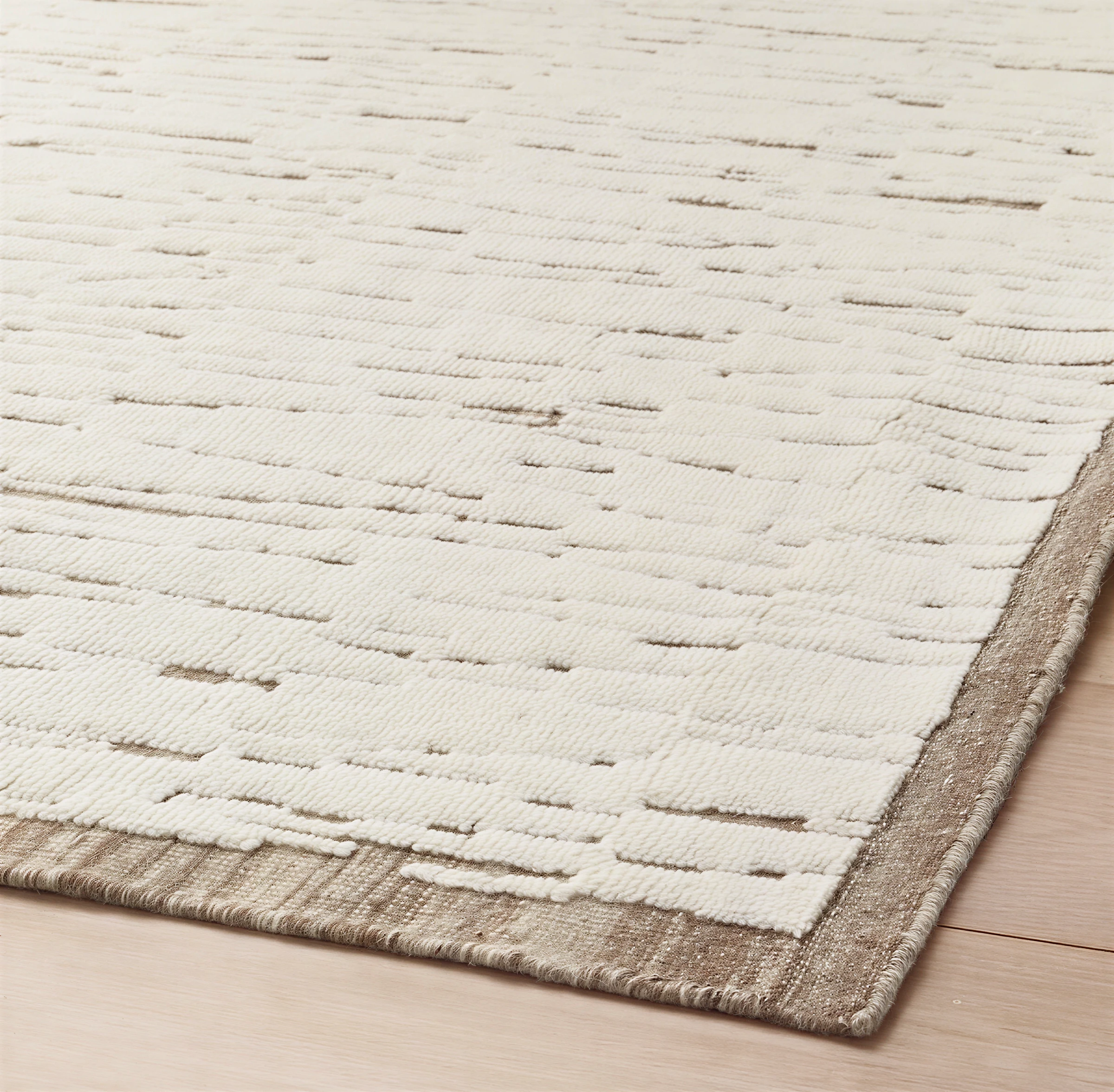
Pile vs. No Pile: The Feel Difference
This is the most immediately perceptible distinction. Step onto a flat-weave rug and you feel the floor beneath it, mediated by a firm, structured textile. The sensation is clean and purposeful — flat-weaves have an almost architectural quality underfoot. They are excellent in spaces where you want to preserve a sense of groundedness: studies, dining rooms, hallways, or open-plan living areas where the rug reads more as a graphic element than a tactile destination.
Step onto a hand-knotted pile rug and the experience is entirely different. The pile absorbs your weight, yielding slightly, creating a sense of cushion and warmth. This quality is magnified when the pile is cashmere or fine wool. In a bedroom or sitting room, a hand-knotted rug invites you to pause, to linger. It changes the acoustic character of a room, softening sound in a way a flat-weave cannot.
Pile height matters within hand-knotted rugs as well. Kapetto's cashmere rugs are woven to a 15mm pile height — generous enough to feel genuinely luxurious, but not so deep that the rug loses its visual crispness. The Kiri wool pile sits at 14mm, firm and resilient underfoot.
Durability: Which Construction Lasts Longer?
Both constructions, made well, are extraordinarily durable — but in different ways and for different conditions.
Flat-weave rugs have no pile to crush, shed, or wear unevenly. The surface remains consistent over time, and because both sides of the rug are equally finished, flat-weaves can be rotated and even flipped, effectively doubling their usable life. They tend to handle high foot traffic extremely well. Their Achilles' heel is moisture: flat-weaves can take longer to dry when wet, and if moisture is trapped beneath them, they may be prone to mildew if not dried quickly.
Hand-knotted rugs are built to last generations when properly cared for. The knot structure actually grows tighter and more cohesive with gentle use. The pile will eventually show some wear in high-traffic paths, but a well-made rug at 100 KPSI will take decades of normal household use before any significant thinning becomes visible. Hand-knotted rugs benefit enormously from a quality rug pad, which absorbs impact and prevents the warp from flexing against hard floors.
For families with pets, high-traffic entry zones, or homes with children, a flat-weave is often the more practical choice for heavily used spaces. For living rooms, bedrooms, and dining rooms in well-maintained homes, hand-knotted rugs will simply outlast nearly everything else in the room.
Price Difference: Why Hand-Knotted Costs More
The price difference between flat-weave and hand-knotted rugs is real and substantial — and it is entirely explained by labor.
A skilled weaver working on a flat-weave rug can complete significantly more surface area per day than a knotter working on a pile rug. The interlacing of weft and warp is faster than tying individual knots, cutting them, and advancing row by row. A 9-by-12-foot flat-weave might take one to two months to complete; a hand-knotted rug of the same size at 100 KPSI can take four to six months.
That labor difference, multiplied across the life of a workshop, is reflected directly in retail prices. At Kapetto, our flat-weave Yuka is priced to make artisan craftsmanship accessible without compromise; our hand-knotted pieces reflect the full weight of months of skilled human work. Both represent exceptional value when considered against their longevity.
A hand-knotted rug is not furniture. It is an heirloom that happens to be on the floor — an object whose value grows as the room around it changes.
Kilim vs. Hand-Knotted: Clearing Up the Terminology
The word "kilim" is often used loosely as a synonym for "flat-weave," but kilim is more precisely a regional and stylistic term. A kilim is a specific type of flat-weave originating in Turkey, the Caucasus, and Central Asia, typically featuring bold geometric patterns in natural wool. All kilims are flat-weaves, but not all flat-weaves are kilims.
Modern flat-weave rugs — like Kapetto's Yuka — draw on the structural principles of kilim weaving while translating them into contemporary palettes and proportions suited to today's interiors. They share the same no-pile construction and similar durability characteristics, but the design language has evolved considerably from the traditional geometric motifs.
When to Choose a Flat-Weave
- Dining rooms, where chairs are pulled in and out frequently and the rug sees concentrated point loads
- Entryways and hallways with high daily foot traffic
- Rooms where a graphic, pattern-forward floor covering is the design intention
- Spaces where you want to layer rugs — flat-weaves sit low and layer beautifully under a smaller pile rug
- Projects with tighter budgets where quality and craftsmanship remain non-negotiable
- Warmer climates where the cooler feel of a flat surface underfoot is an advantage
When to Choose Hand-Knotted
- Living rooms and sitting rooms where the rug is the anchor of the entire composition
- Bedrooms, where barefoot contact with a soft pile surface is part of the daily experience
- Spaces where acoustic softening is a design consideration
- Heirloom-quality projects where the intention is a piece that improves with decades of use
- Rooms where the handmade character of the textile should be immediately apparent
- Any space where depth, warmth, and tactile luxury are primary design goals
Kapetto's Approach: Both, Done Properly
At Kapetto, we do not believe there is a hierarchy between these two construction types. They are answers to different questions. Our Yuka flat-weave in New Zealand wool is made by artisans in Bhadohi using the same commitment to quality that governs every piece we make — the same natural dyes, the same ethical workshop conditions, the same attention to proportion and finish. Our Kiri hand-knotted rug brings months of individual craft to a surface of real depth and resilience.
The right choice is the one that serves your room, your life, and your vision for the space. If you are working on a trade project and would like guidance, our team is available through the Kapetto Trade Program to help specify the right construction for every application. And if neither standard option quite fits, our custom program can produce either construction in any size or colorway your project requires.
To learn more about how our artisans approach both techniques, visit our artisans page or explore the full story of Kapetto's craft.


