

The question of cashmere versus wool comes up in almost every conversation about luxury rug materials, and it deserves a more honest answer than the typical "it depends" non-response. These two fibers are genuinely different in character, performance, and the sensory experience they deliver. The best luxury rug material for your home is not a universal answer; it is a specific answer that depends on how you live, where the rug will sit, and what you want to feel when you walk into the room. This guide will give you what you need to make that call with confidence.
Where Each Fiber Comes From
Understanding the origin of each fiber clarifies why they behave the way they do and why they cost what they cost.
Wool for luxury rugs comes primarily from Merino sheep raised in New Zealand and Australia. These flocks produce a long-staple, fine-diameter fiber with a natural crimp that gives wool its signature resilience. A single fleece can yield two to four kilograms of usable fiber, and the animals are shorn annually. Wool is abundant relative to demand; this is one of the reasons it remains the workhorse of fine rug production. It is an excellent material because of its inherent qualities, not despite its relative accessibility.
Cashmere comes from the soft undercoat of Changthangi goats raised at high altitude in the plateaus of Mongolia, Kashmir, and Central Asia. The fiber is combed, not shorn, from the animals once a year in spring. Each animal yields only 150 to 200 grams of usable cashmere — enough for perhaps one-third of a sweater. For a rug, you need far more fiber than for any garment. This scarcity is not manufactured; it is inherent to the biology of the animal and the quality of the environment that produces the finest fiber.
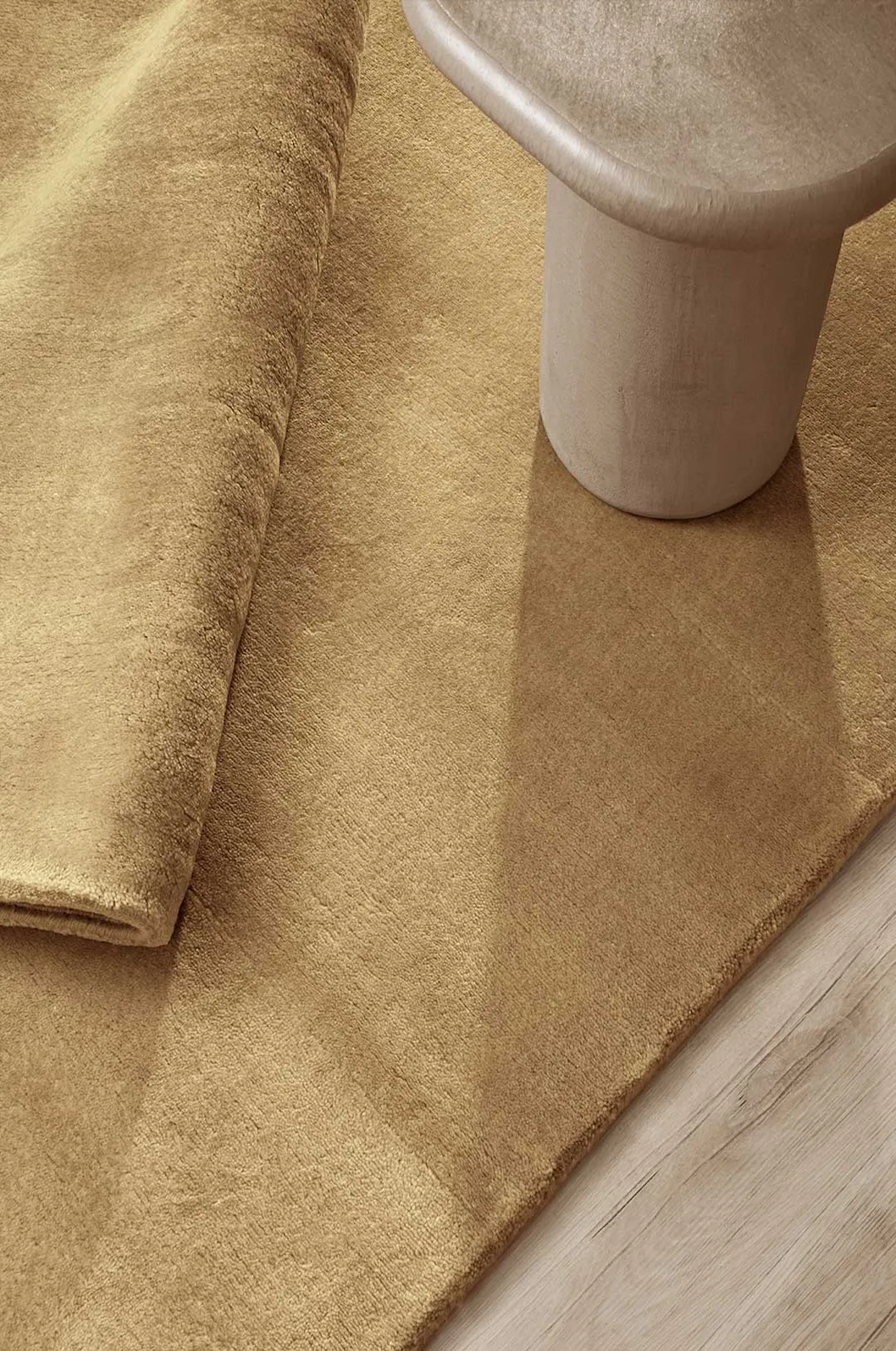
Softness and Texture: The Most Immediate Difference
If you were to stand barefoot on a fine wool rug and then step onto a properly made cashmere rug at 15mm pile, the difference would be immediately apparent. Not gradual, not subtle — immediate.
Wool is soft. A high-quality Merino wool rug, particularly in its pile constructions, is genuinely pleasurable underfoot. It has warmth, density, and a natural spring that makes it feel alive rather than inert. After a few weeks of use, it develops a slight sheen as the fiber surface polishes from foot traffic — this is called the "walking sheen" and is considered a positive development.
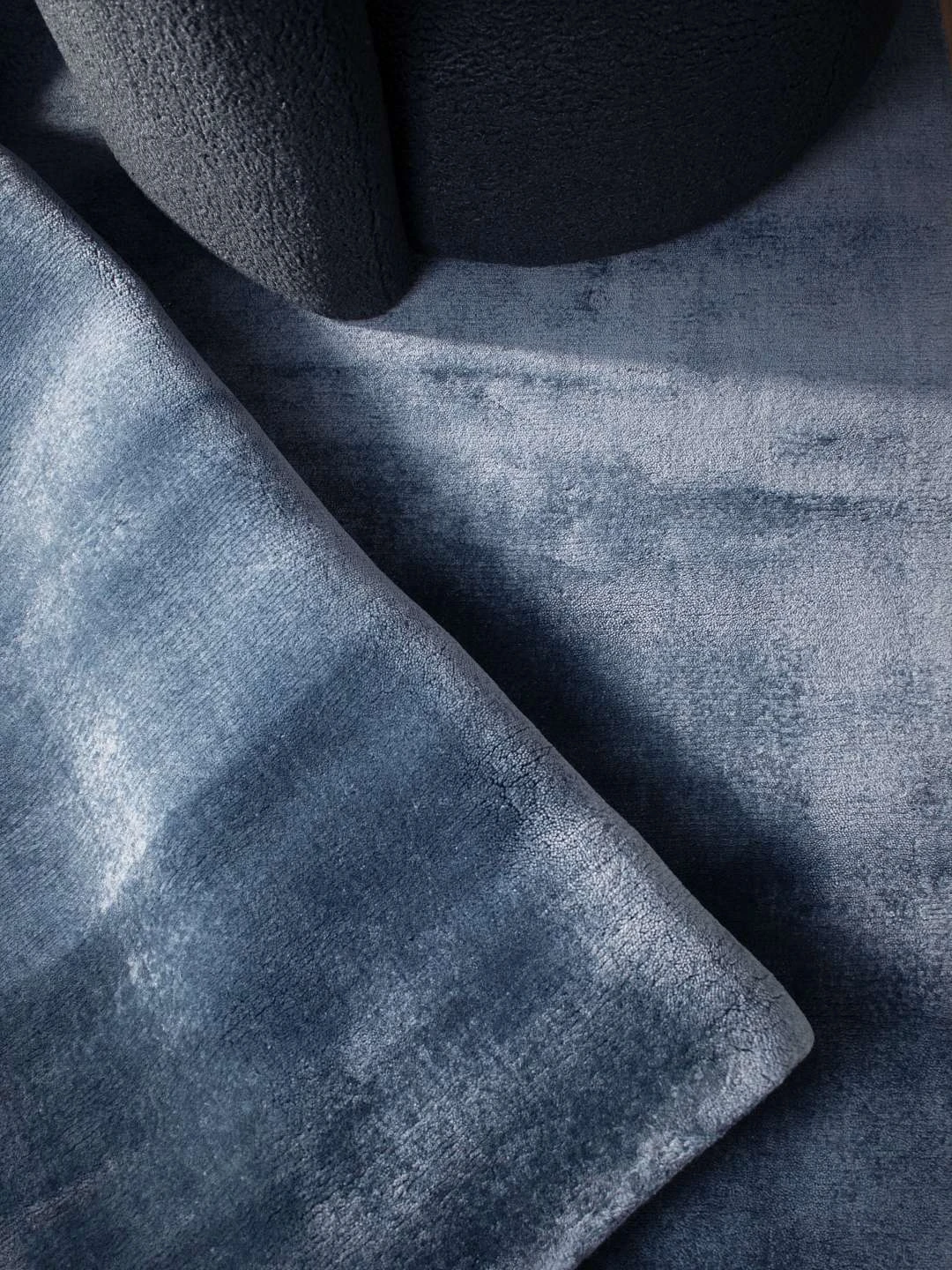
Cashmere is something else. The fiber diameter of fine cashmere is under 15 microns — finer than the finest Merino, and below the threshold at which fiber is perceptibly itchy against skin. Walking on a cashmere rug feels less like walking on a textile and more like walking on something that has no business being on a floor at all. It is the kind of tactile experience that makes adults stop what they are doing and look down at their feet in mild surprise.
At Kapetto, our Cashmere collection is woven with a 15mm pile height, which is the depth needed to fully exploit cashmere's sensory qualities. A cashmere rug at 8mm would be softer than wool but would not deliver the full experience the fiber is capable of.
Durability: A More Nuanced Picture
The conventional wisdom is that wool is more durable than cashmere, and in a simple comparison this is accurate. But durability in a rug depends on more than fiber alone; it depends on construction, knot density, and placement.
Wool's durability advantages: Wool has a natural crimp that helps it spring back from compression. Its scales interlock under pressure without permanently distorting. It is naturally flame-resistant and soil-resistant. A well-constructed wool rug in a high-traffic area — a hallway, a living room with heavy daily use — will look presentable for decades with proper care.
Cashmere's durability in context: Cashmere is a finer, softer fiber, which means it requires more thoughtful placement. In a bedroom, a private sitting room, or a formal living room with moderate foot traffic, a cashmere rug will last for generations with proper care. The construction matters enormously: a Kapetto cashmere rug's loom-knotted structure creates a pile that is more resilient than its softness might suggest.
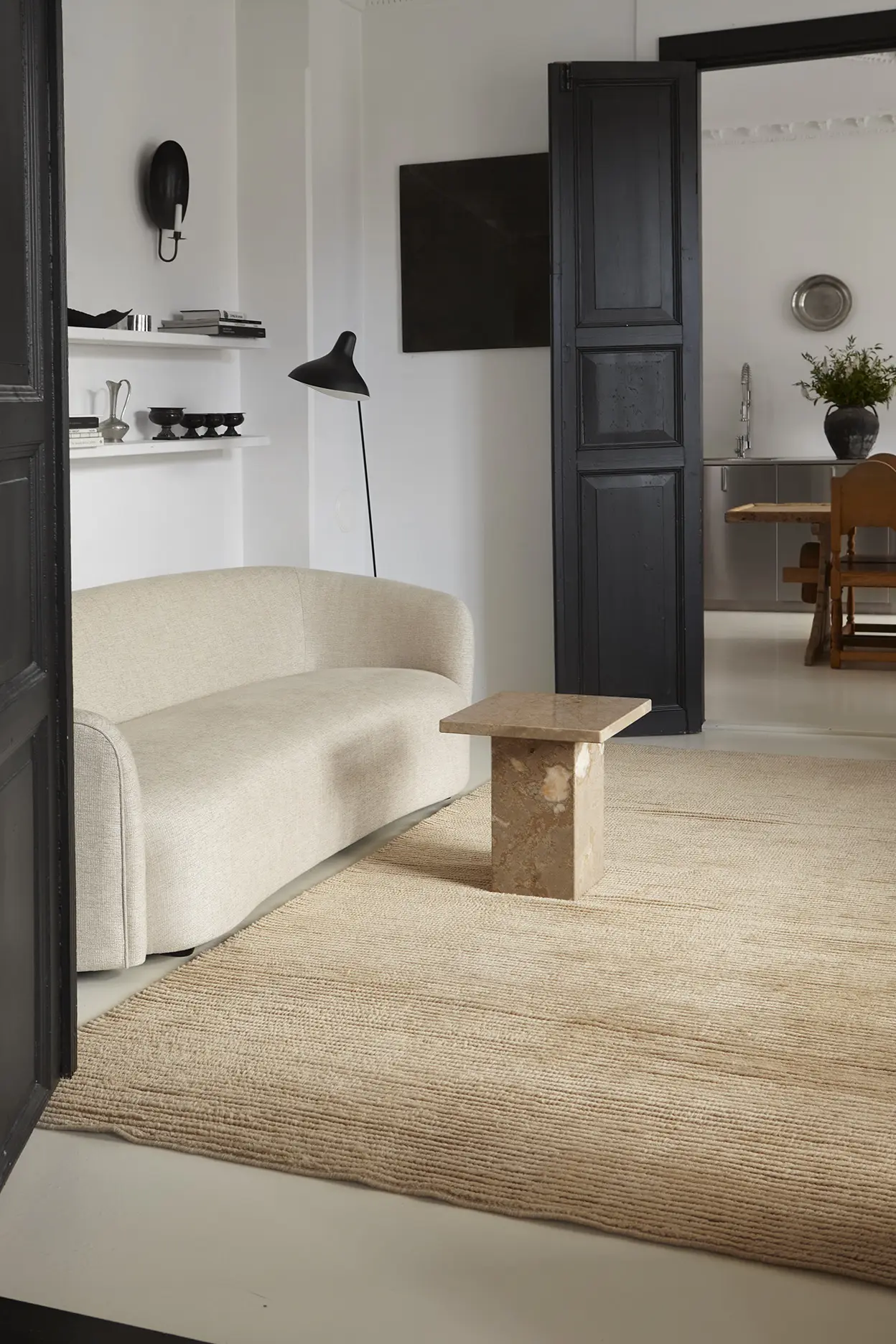
The key insight is that placement determines durability requirements. Specifying cashmere for a primary entry hallway or a dining room with heavy chair scrape is asking the wrong fiber to do the wrong job. Specifying wool for a master bedroom where the primary experience is barefoot comfort is a missed opportunity. Both fibers are durable when used appropriately; both will show premature wear if placed without regard for what the space demands.
Maintenance: What Each Fiber Actually Needs
Both cashmere and wool are natural protein fibers and share most of their care requirements. Neither tolerates heat, harsh alkaline chemicals, or aggressive mechanical cleaning. Both benefit from regular vacuuming with a suction-only or low-beater setting, prompt attention to spills, and professional cleaning every one to three years.
The practical differences in maintenance between the two:
Wool has a higher lanolin content, which provides natural resistance to soil and liquid penetration. Spills bead on new wool before absorbing; this gives you more time to blot. Wool also sheds a small amount in the first weeks after installation — normal and temporary — as loose fiber ends work out of the pile.
Cashmere's finer fiber means slightly less natural protection from soil. Spills should be addressed very promptly. Vacuuming should be gentler, with lower suction and more frequent attention to pile direction. Cashmere also benefits from being rotated slightly more often than wool — every four to six months rather than six to twelve — to ensure even wear distribution.
For both fiber types, professional cleaning by a specialist in natural fiber rugs is the only safe approach to deep cleaning. We cover the specifics in detail in our wool care guide, and much of that guidance applies equally to cashmere.
Price: Understanding the Difference
The price difference between cashmere and wool rugs reflects the material cost differential almost directly. Fine cashmere fiber costs eight to ten times more than fine New Zealand wool per kilogram. A rug requires a substantial quantity of fiber. The math is straightforward.
For buyers comparing Kapetto's cashmere and wool collections:
- Wool rugs (Nami, Yuka, Kiri): Range from approximately $20 to $60 per square foot depending on construction complexity, knot density, and size.
- Cashmere rugs (Caramel, Latte, Rose, Lagoon): Custom sizing at $55 per square foot reflects the material premium as well as the more labor-intensive finishing that cashmere's pile height requires.
The frame for evaluating this cost is longevity and daily experience. A cashmere rug in a bedroom is not a decoration; it is the surface you step onto every morning and every night. Amortized over twenty or thirty years of that experience, the premium is modest relative to its contribution to quality of life.
Which Rooms Work Best for Each
Where cashmere performs best
- Master bedrooms: The definitive cashmere room. Moderate traffic, barefoot priority, and often the room where a client is most willing to invest in pure sensory quality.
- Private sitting rooms and libraries: Lower traffic than a main living room, used for reading, conversation, and leisure. The softness of cashmere contributes to the contemplative atmosphere these rooms are designed to create.
- Formal living rooms: Appropriate when the room sees moderate rather than daily heavy use. A cashmere rug elevates a formal living room in a way that few other single decisions can match.
- Home offices: The underappreciated cashmere application. A quiet, softly lit room where you spend focused hours benefits enormously from a cashmere floor.
Where wool performs best
- Main family living rooms: The highest-traffic room in most homes is where wool's durability and soil resistance earn their keep. The Kiri hand-knotted or Nami are the right choices here.
- Dining rooms: Chair movement, dropped food, and the inevitable spill make wool's resilience particularly valuable. Its cleanability under real conditions is superior to cashmere in this context.
- Hallways: High directional traffic demands a fiber that can handle it. Wool, at an appropriate knot density, is the correct choice.
- Children's rooms and playrooms: The resilience and cleanability of wool make it the practical choice in rooms where the floor takes a lot of daily abuse.
- Coastal and casual homes: The relaxed, natural quality of wool (and jute, for the most casual spaces) suits coastal interiors where excessive formality would feel wrong.
Side-by-Side Comparison
| Property | Cashmere | Wool |
|---|---|---|
| Softness | Exceptional | Very good |
| Durability in high traffic | Moderate (placement matters) | Excellent |
| Soil resistance | Good | Very good (natural lanolin) |
| Care requirements | Gentle, prompt attention to spills | Regular vacuuming, forgiving of minor spills |
| Temperature regulation | Excellent (warm in winter, cool in summer) | Very good |
| Price point | Premium | Mid to high |
| Best rooms | Bedroom, sitting room, formal living room | Family room, dining room, hallway, children's room |
| Longevity (with proper care) | 30 to 50+ years | 50 to 100+ years |
The Case for Both
The most thoughtful approach for a whole home is not choosing between cashmere and wool but using each where it belongs. A master bedroom with a cashmere rug and a family room with a wool rug is not a compromise; it is a considered material strategy that optimizes the experience of every room independently.
Designers working with Kapetto through the Trade Program frequently develop exactly this kind of cross-collection specification for their clients, combining cashmere in private and formal spaces with wool in the rooms that see the most daily life. Memo samples of both fiber types are available, allowing clients to experience the difference directly before committing.
If you are working through this decision for your own home, the most direct path to clarity is the simplest: request samples of both and put your bare feet on each in the actual room where the rug will live. No amount of description — including this one — is more persuasive than the immediate experience of the material itself.
Frequently Asked Questions
Is cashmere really worth the extra cost over wool for a rug?
In the right room, yes. The softness differential between cashmere and fine wool is significant, and for a bedroom where you walk barefoot daily, that experience compounds over years of use. In a high-traffic living room, the extra cost of cashmere does not translate into proportionally better performance — wool is the more appropriate investment in that context.
Can cashmere rugs be used in areas with pets?
Cashmere rugs can coexist with pets if you are committed to prompt stain attention and regular maintenance. However, the softer fiber is more susceptible to pet claw damage than a higher-density wool construction, and pet urine is particularly damaging to cashmere if it is allowed to set. For homes with active pets in high-traffic areas, a dense wool construction is the more practical choice.
Do cashmere rugs shed like cashmere sweaters?
New cashmere rugs shed minimally in the first few weeks as loose fiber ends work out of the pile. This is normal and stops. The quantity is far less than the shedding you might notice from a new wool rug, because the construction method (loom-knotted) secures the pile more firmly than a simple weave. Regular vacuuming during the break-in period accelerates the process.
How does jute compare to both cashmere and wool?
Jute is a plant fiber rather than an animal fiber, and it serves a different function. Its texture is more casual, its durability in low-traffic applications is excellent, and its environmental credentials are exceptional. It is not a direct competitor to cashmere or fine wool in terms of softness or luxury, but as a material for informal spaces, coastal rooms, or any setting where a relaxed, natural aesthetic is the goal, it is excellent. See the Sabi collection for how jute can be used beautifully at the higher end of the market.


